Correctional Wearable Technology
A Standard for Jails, Prisons, and Detention Centers
Correctional wearable technology combines three things built for custody: a wrist- or ankle-worn sensor, a wireless network that works through concrete and steel, and one command dashboard. OverWatch® by 4Sight Labs analyzes multiple biometric and motion signals to spot patterns that may call for a physical welfare check. When it finds one, staff get a notification to check on the person, and every step is time-stamped in the record.
What does wearable technology for corrections have in common everywhere?
A county jail, a state prison, and a detention center are different in many ways. But for wearable technology for corrections, four facts are the same everywhere:
- The building blocks wireless signals.
- The people wearing the device didn't choose to wear it.
- Staff can't stand at every door.
- The record will be reviewed later.
Correctional wearable technology has to be designed around those four facts from the start, not adapted from a consumer product. OverWatch® was built that way, and it runs to one standard whether the facility is a single housing unit or a multi-building campus. This article lays out that standard.
Standard one: follow the person, not the room
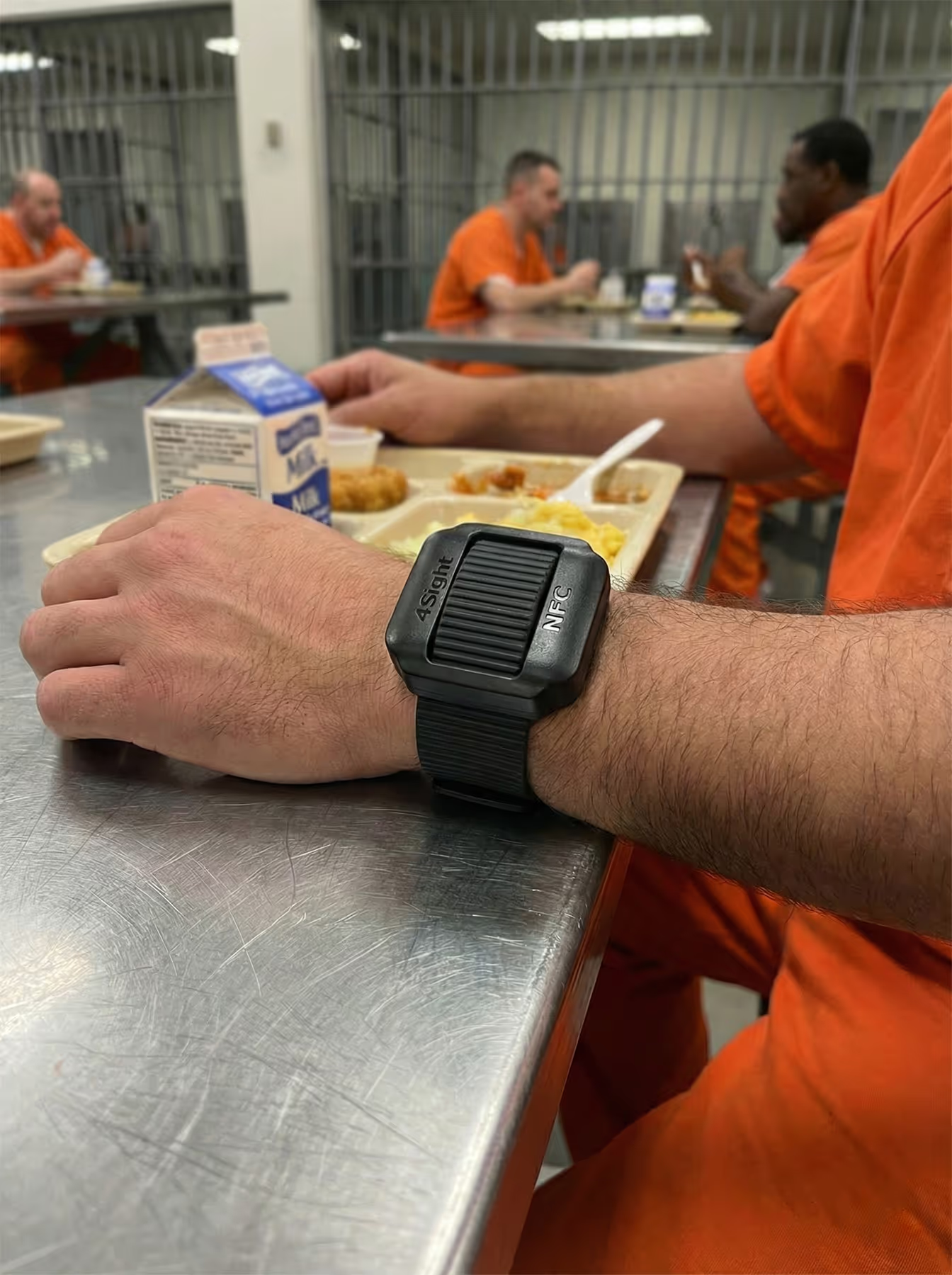
Corrections wearable devices differ from radar and cameras in one key way: they follow the individual. The OverWatch® sensor is worn on the wrist or ankle, and it moves with the person from cell to dayroom to housing unit.
Because each sensor belongs to one person, a notification names that individual and their location zone. Room-based monitoring can't do that once a cell holds more than one person. The notification tells staff to check on the person. It doesn't say what triggered it, and staff are never shown physiological values or trends.
Standard two: work through the building
Concrete, rebar, and steel doors block ordinary Wi-Fi and consumer short-range radio. OverWatch® runs on its own wireless network, built for custody construction. It works for a single-cell deployment or a complex multi-building facility, whether the agency monitors two sensors or hundreds. The system runs at 99.99% uptime.
Our press release on why consumer wireless technology falls short in custody explains the problem in more detail.
Standard three: stay on
The band is built with 250 lb pull strength to resist tampering, and the battery lasts 14 days. Across 70,000+ monitored cases, the tamper-removal rate is 0.06% as of October 2026. If a device is damaged or its battery runs low, staff get a system notification, so the issue is documented instead of discovered at the next round.
A 14-day battery also means charging fits into a housing rotation instead of becoming a daily task on every unit.
Standard four: leave a record
Every notification and every staff response is time-stamped and kept on one command dashboard, which also shows location zones and device status. The record can be exported for post-incident review. The agency decides how notifications are routed and escalated, and its policy decides the response.
For agencies that already use Guardian RFID, notifications can also reach Spartan handhelds through the Command Cloud® mobile app. This is optional, and OverWatch® works fully without it.
- A notification is sent with the person's identity and location zone.
- Staff acknowledge it and do a physical welfare check under policy.
- The response is time-stamped next to the notification.
- The record is kept for internal review, compliance, and outside accountability.
Correctional facility wearables by setting
Wearables in correctional facilities are deployed based on risk, not headcount, and the agency decides who is enrolled using its own criteria. Most agencies start with booking, observation cells, and units with reduced staffing, then expand as policy evolves.
- In a jail, the focus is booking and the first hours of custody.
- In a prison, it shifts toward restrictive housing and long-stay units.
- Detention center wearables sit between the two, with a population that changes often and a lot of first-days risk.
The platform works the same way for a targeted rollout or an agency-wide one. Notifications, signal reliability, and documentation stay consistent no matter how many sensors are deployed, and OverWatch® is in use in county, state, and private facilities today. For real examples, see how the Sarasota County Jail and the Hillsborough County House of Corrections rolled out OverWatch®.
Standard five: fit the agency's systems and security
Correctional facility wearables that can't connect to the records an agency already keeps create a second system to reconcile, and nobody in corrections needs that.
Data is encrypted while it moves and while it's stored. 4Sight Labs is SOC 2 certified, the platform is built with HIPAA-compliant safeguards, and access is limited to safety and welfare records. OverWatch® is also built to connect with the jail management and records systems your agency already uses.
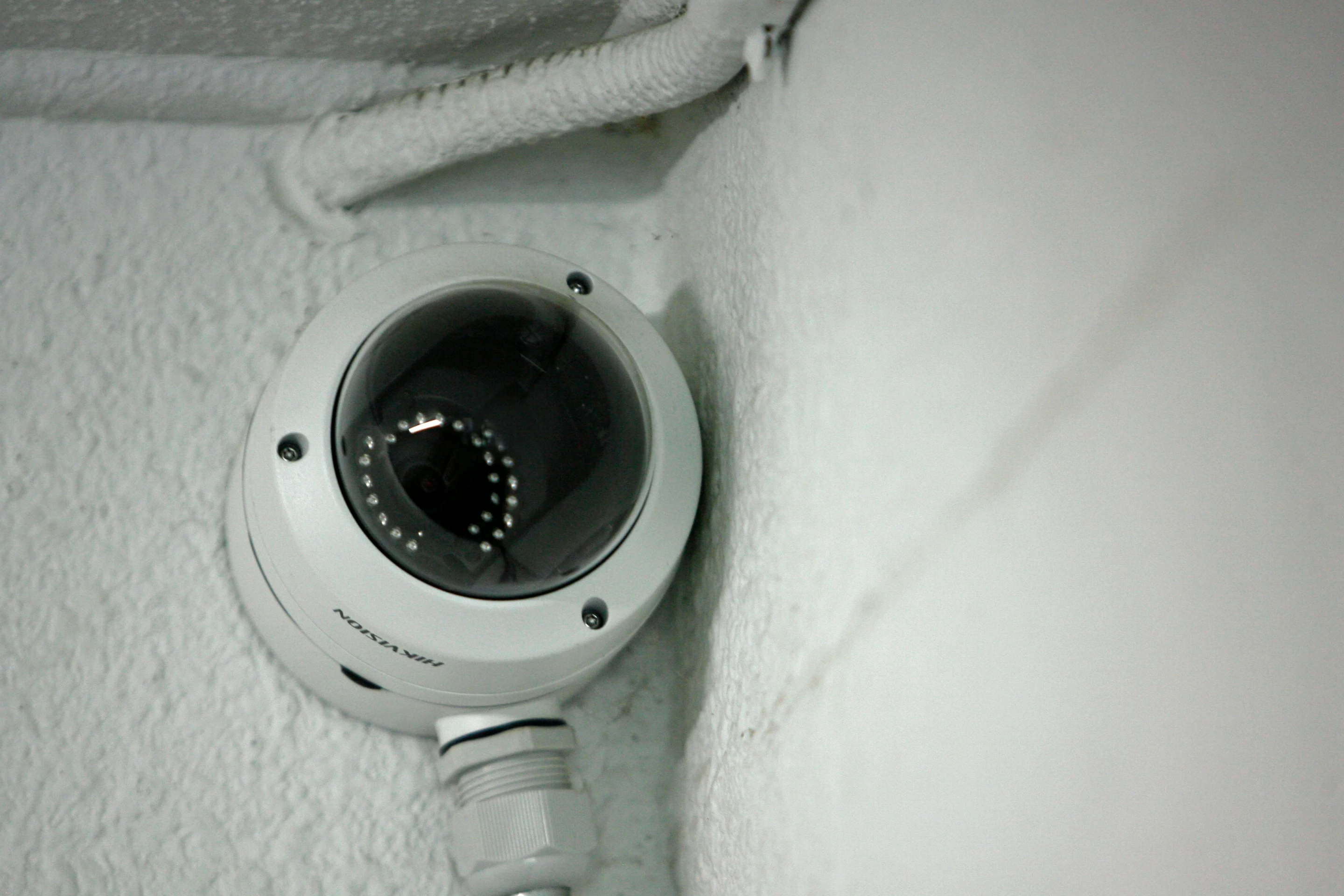
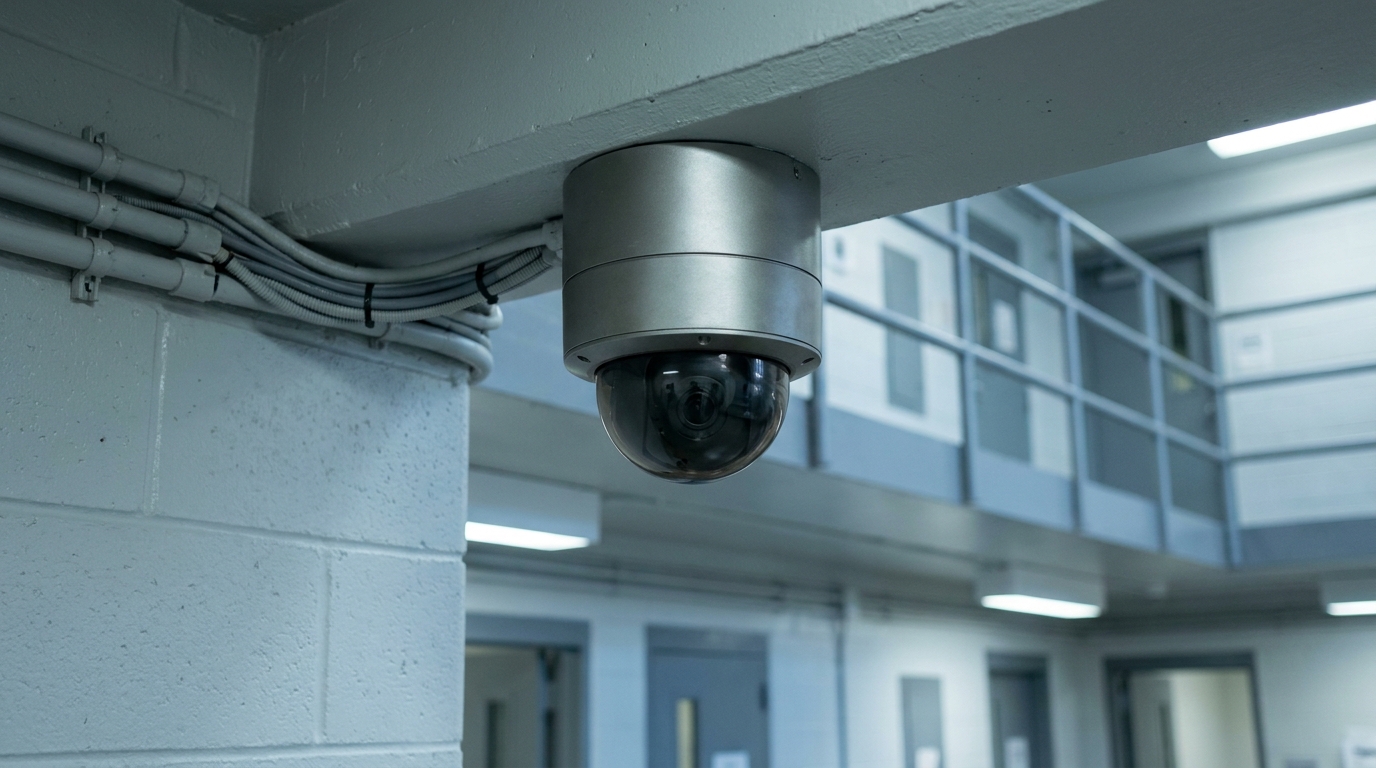
OptiGuard™ adds a camera layer on the same dashboard. It applies Liveness-Detection™ to the feeds from your existing cameras, looks for patterns consistent with reduced movement, and notifies staff to check the cell in person. It also documents out-of-cell events.
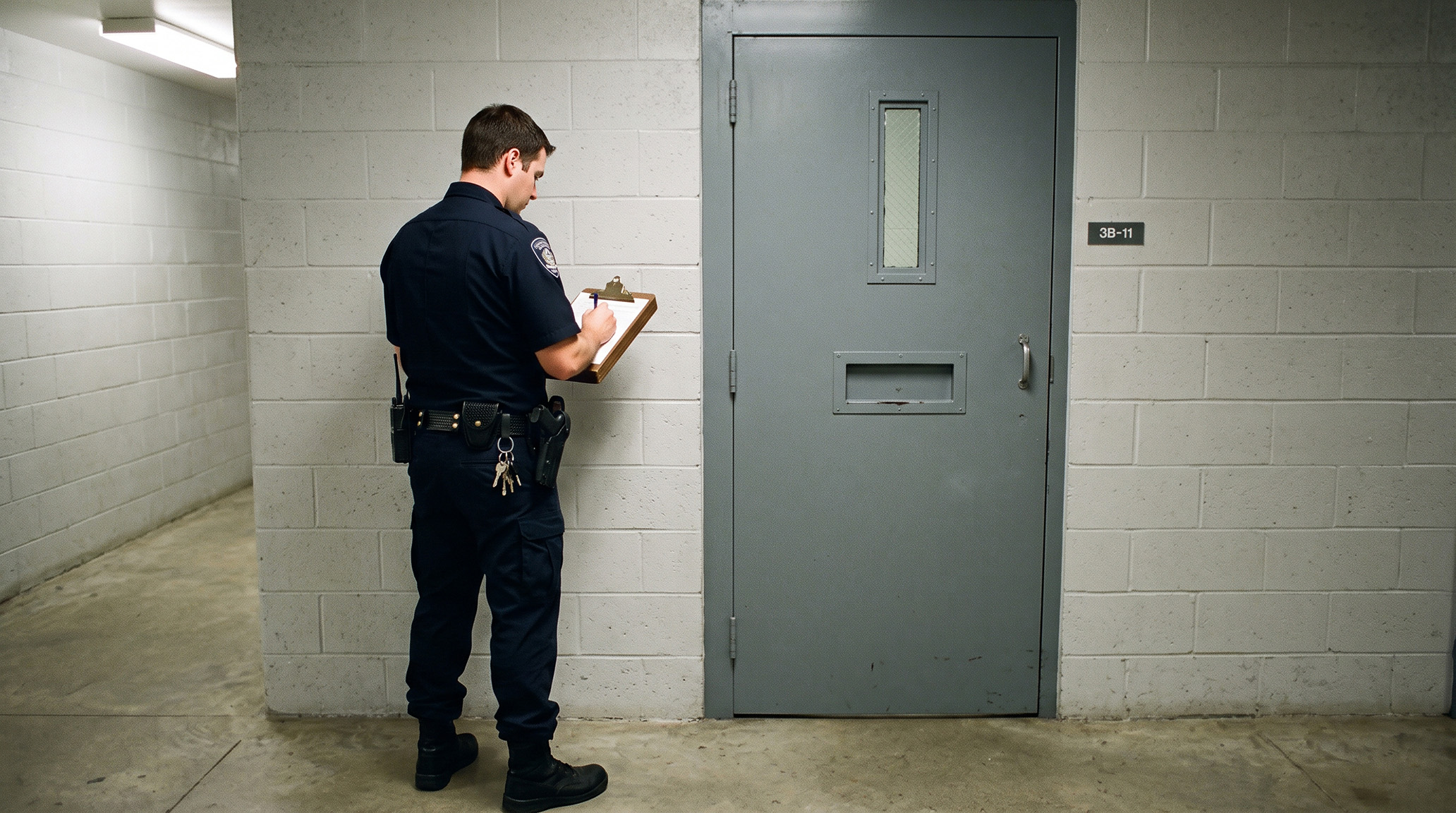
Neither product replaces officer rounds, and required check intervals vary by state. Our guide to state jail observation compliance compares those rules side by side.
What to require in writing from any vendor
- A signal that works through your construction without facility Wi-Fi, with uptime documented in live facilities.
- Pull strength, battery life, and removal rate, as numbers.
- Agency-defined notification routing, no vendor interpretation, and every response time-stamped and exportable.
- A SOC 2 report, encryption details, and a clear path to connect with your jail management and records systems.
- Where the device is designed and made, and who controls the firmware.
Why OverWatch®?
The sensor is designed and made in the U.S., with a controlled hardware and firmware supply chain. If federal grant money is part of the budget, that matters. Our article on US manufactured correctional technology covers the main points to keep in mind.
OverWatch® is in use at 80+ agencies in 19 states and has monitored 70,000+ individuals, with 297+ early interventions so far. Behind the scenes, 5M+ hours of monitoring data help cut down on false notifications, so officers aren't chasing noise. 4Sight Labs has been an Axon technology partner since 2022.
The bottom line
Jails, prisons, and detention centers ask different things of a wearable, but the standard underneath is the same. Correctional wearable technology has to follow the person, work through the building, stay on, leave a record, and fit the agency's systems. OverWatch® was built to meet all five at any scale.
Want to see it run in a facility like yours? Schedule a demonstration with 4Sight Labs.
Frequently Asked Questions
Is correctional wearable technology the same in a jail and a prison?
The device and platform are the same. What changes is the focus: booking and the first hours of custody in a jail, and restrictive housing and long-stay units in a prison. OverWatch® runs to one standard in both.
Can it scale to a state DOC or a private operator?
Yes. OverWatch® works for both targeted rollouts and agency-wide programs across complex correctional systems, and it's in use in county, state, and private facilities.
Does "biometric" mean fingerprints or facial recognition?
No. The sensor is assigned to one person when it's issued, and it doesn't scan or identify anyone. Staff get a notification to check on the person, not a reading.
Wrist or ankle?
Either. The OverWatch® sensor can be worn on the wrist or ankle, and staff choose the placement for each person.
Are OverWatch® and OptiGuard™ medical devices?
No. OverWatch® and OptiGuard™ are not medical devices and are not intended to diagnose, treat, cure, predict, or prevent any disease or condition. Correctional staff are not shown physiological values, clinical thresholds, diagnoses, or medical interpretations. Notifications direct staff to conduct a physical welfare check under agency policy, and the products do not replace clinical judgment, medical staff, or required observation rounds.