30 Minute Checks in Jail: Standard & Proof

The Baseline Standard and How to Prove It
30 minute checks in jail are the baseline observation standard in American jails. The American Correctional Association's jail standards say every individual in custody must be personally observed at least every 30 minutes, on an irregular schedule. Many states use the same interval. The check has to be in person, staggered and documented. Video can support it, but it can't replace it.
Where does the 30 minute standard come from?
The 30-minute interval is the most common observation baseline in U.S. jails. It comes from the American Correctional Association (ACA). Its jail standards, including the Standards for Small Jails and the Core Jail Standards adopted in 2010, require an officer to personally observe every individual in custody at least every 30 minutes, on an irregular schedule. Individuals who are violent, mentally disordered or behaving unusually should be observed more often.
State rules follow the same idea, with local differences:
- Minnesota. Rule 2911.5000 requires custody staff to personally observe all individuals in custody at least once every 30 minutes. Checks must be staggered, and a check missed because of an emergency must be logged and reviewed by a supervisor.
- Texas. Administrative Code §275.1 sets a 60-minute baseline, but requires checks at least every 30 minutes in areas holding detainees known to be assaultive, mentally ill or at risk of self-harm. It also says camera monitoring can't be used instead of personal observation. Our Texas jail standards compliance guide covers TCJS in detail.
The safe practice: treat 30 minutes as the longest allowed gap for any housing unit that holds anyone other than fully cleared general population. Our guide to state jail observation compliance compares the rules state by state.
What does a compliant 30 minute check actually require?
Three things, and each one has to show up in the record:
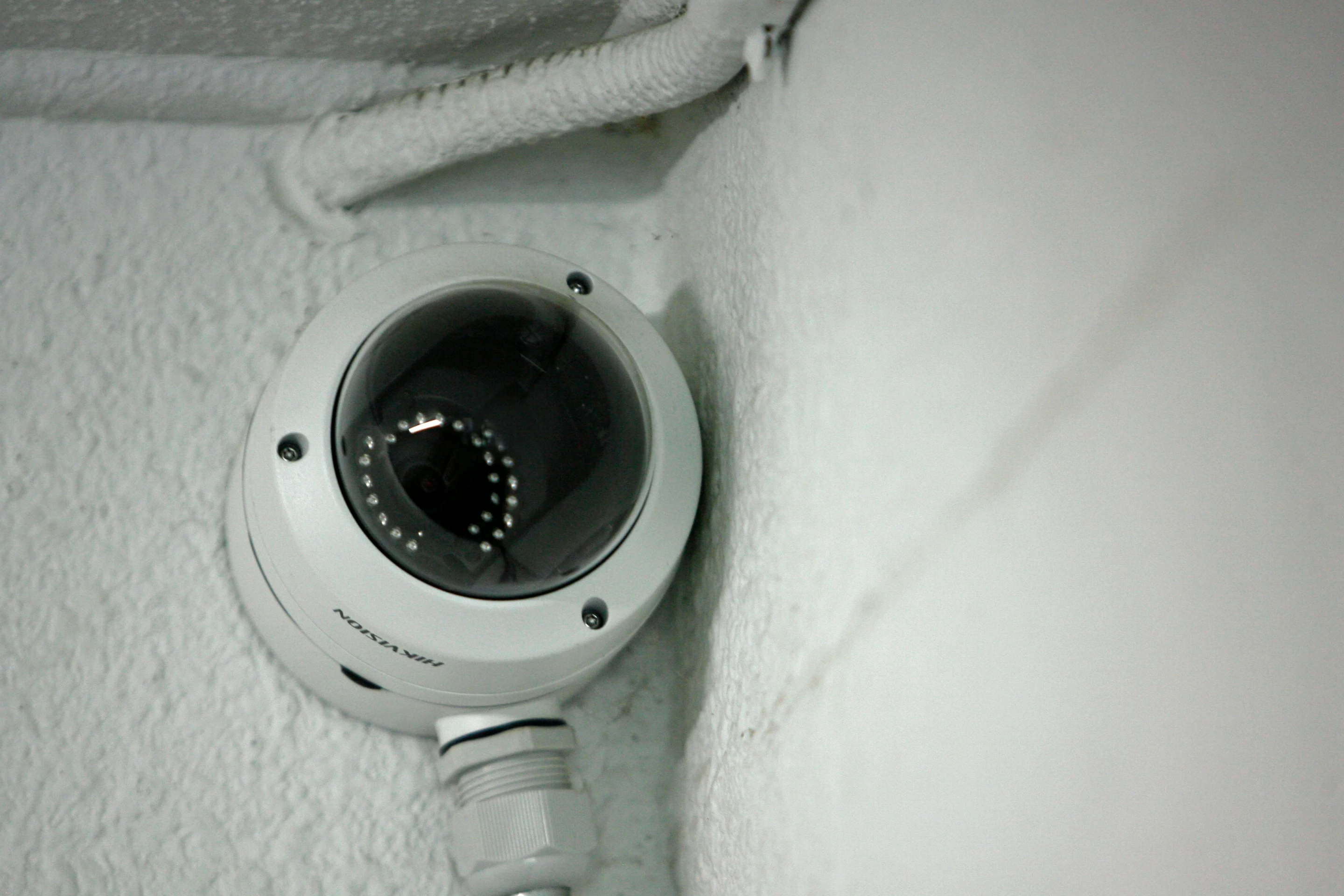
- Personal observation. The officer sees the person directly. A camera feed, a hallway walk-by or a count through a day-room window doesn't count.
- Irregular timing. The gap changes from round to round, always staying under 30 minutes, so nobody can predict the next check. A log showing checks at exactly :00 and :30 is a red flag for auditors.
- Documentation at the time of the check. The record shows who checked, when, where and what they saw. It's written when the round happens, not at shift change.
There's a fourth rule hidden in the exceptions. When a check is late or missed, the record has to say why, and a supervisor has to review it. A busy jail's log with no exceptions at all looks suspicious.
Why do 30 minute checks fail in practice?
Thirty minutes is long enough for a lot to happen, and short enough that officers on a big unit always feel behind. The Bureau of Justice Statistics counted 1,200 deaths in local jails in 2019. Almost 40% of the people who died had been held for a week or less.
Reviews of those deaths keep finding the same record-keeping problems:
- Rounds written up in a block after the fact.
- Logged times that don't match the video.
- Hallway checkpoint scans offered as proof that cells were checked.
- Long gaps the log doesn't explain.
Each of these is a documentation failure before it's a supervision failure. If an officer made every round but logged them from memory, the record looks the same as if they skipped them. That's the exposure. Our article on institutional liability in a custodial death case explains how investigators read these records.
How does 4Sight Labs help document 30 minute checks in jail?
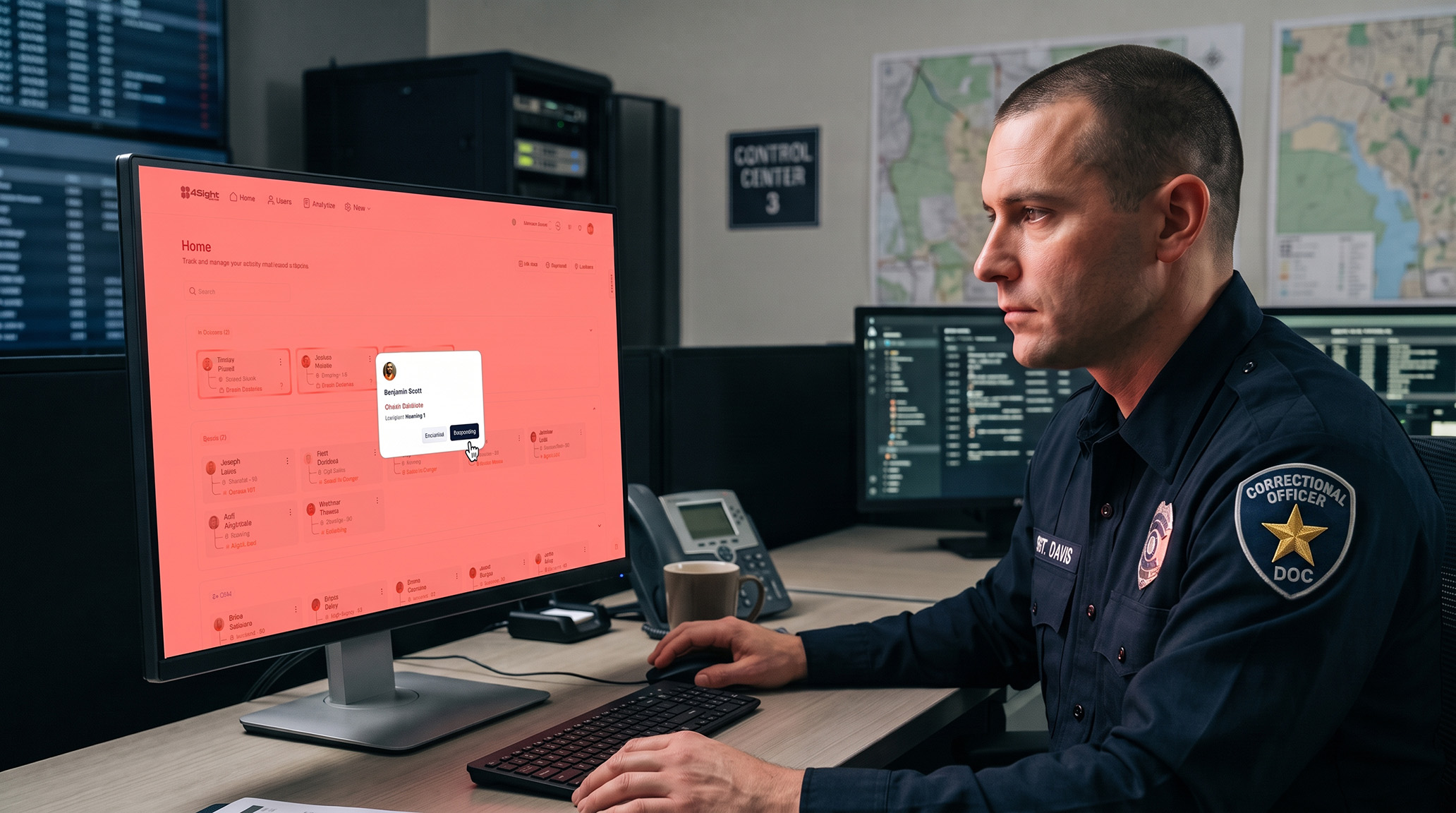
OptiGuard™ turns the cameras a facility already has into a record of every round. It works with existing cameras, with no new camera hardware and no video stored in the cloud. It logs each staff visit to a cell (wellness checks, meals and other cell visits) as a time-stamped event. A supervisor can see every round on a unit, the gap between rounds and whether the timing was irregular, without pulling video.
Between rounds, OptiGuard™ applies Liveness-Detection™ to the camera feed, looking for motion, presence and subtle movement for up to four people in a cell. When no motion is detected, it notifies staff to check the cell in person.
OverWatch® adds a wrist- or ankle-worn sensor for people the agency places on risk-based monitoring. The sensor monitors biophysiological signals, and algorithms determine if a physical welfare check is needed. When one is, staff get a notification to check on that person, without waiting for the next round. Staff are never shown physiological values or trends.
Both products report to one command dashboard and connect with the jail management and records systems an agency already uses. You can see the setup on our how it works page.
A few facts about 4Sight Labs:
- 70,000+ individuals monitored as of October 2026.
- Trusted by 80+ agencies in 19 states.
- 5M+ hours of monitoring data and 297+ agency-reported interventions.
- Designed and assembled in the USA.
- SOC 2 audited, with the 2026 SOC 2 audit underway.
- An Axon technology partner since 2022.
How should an agency audit its 30 minute checks?
With a time-stamped record, a weekly audit takes a supervisor about twenty minutes. Without one, it takes days. Here's a simple routine:
- Pick one housing unit and one shift at random.
- List every required round and confirm each one has a recorded event at the cell, not just a log entry.
- Check that the gaps were irregular, and flag any longer than 30 minutes.
- Confirm every exception has a reason and a supervisor sign-off from the same shift.
- Document the audit itself, so you can show the program is supervised.
For more on how rounds and continuous monitoring work together, read observation rounds vs. continuous monitoring. To see a 30-minute round audit on your own housing units, schedule a meeting with 4Sight Labs.
Frequently Asked Questions
Where does the 30 minute check rule come from?
The American Correctional Association's jail standards require an officer to personally observe every individual in custody at least every 30 minutes, on an irregular schedule. Several states use the same interval, including Minnesota, which requires staggered 30-minute checks for all individuals in custody.
Is 30 minutes the rule everywhere?
No. Texas requires face-to-face checks at least every 60 minutes for general population and every 30 minutes in higher-risk areas. Other states set hourly baselines. Agencies should confirm their own state and accreditation rules, and their policy may set a shorter interval.
Do 30 minute checks have to be irregular?
Yes, under ACA standards and most state rules. Checks at exactly :00 and :30 are predictable, and logs that show that pattern get extra scrutiny in audits and lawsuits.
How does OptiGuard™ help document 30 minute checks?
OptiGuard™ logs each staff visit to a cell as a time-stamped event using existing cameras. Supervisors can see the gaps between rounds, and whether they were irregular, on one dashboard without reviewing video.
Are OverWatch® and OptiGuard™ medical devices?
No. OverWatch® and OptiGuard™ are not medical devices and are not intended to diagnose, treat, cure, mitigate, predict or prevent any disease or condition. Staff are not shown physiological values, clinical thresholds, diagnoses or medical interpretations. Notifications direct staff to do a physical welfare check under agency policy, and the products don't replace clinical judgment, medical staff or required observation rounds.