US Manufactured Correctional Technology
Why It Matters in Procurement
Why domestic manufacturing is closer to a compliance question than a preference for many correctional agencies.
Domestic manufacturing often gets treated as a preference, a "buy American if the price is close enough" consideration that comes up after the real evaluation is done. For many correctional agencies, it's closer to a compliance question than a preference, because federal law already restricts specific foreign-made surveillance equipment from certain government and grant-funded uses.
Domestic manufacturing, in a correctional procurement context, means confirming not just where a device is assembled, but whether its underlying components and its data infrastructure fall inside or outside restrictions that already govern many agencies' allowable purchases.
This discussion focuses on operational and procurement considerations in correctional technology sourcing and is not intended to provide legal or regulatory guidance. Compliance with federal procurement restrictions should be confirmed directly with agency counsel and the relevant granting authority.
What Section 889 Actually Restricts
Section 889 of the FY2019 National Defense Authorization Act (NDAA), codified at 2 CFR § 200.216, prohibits federal agencies and recipients of federal grant funding from procuring certain telecommunications and video surveillance equipment.
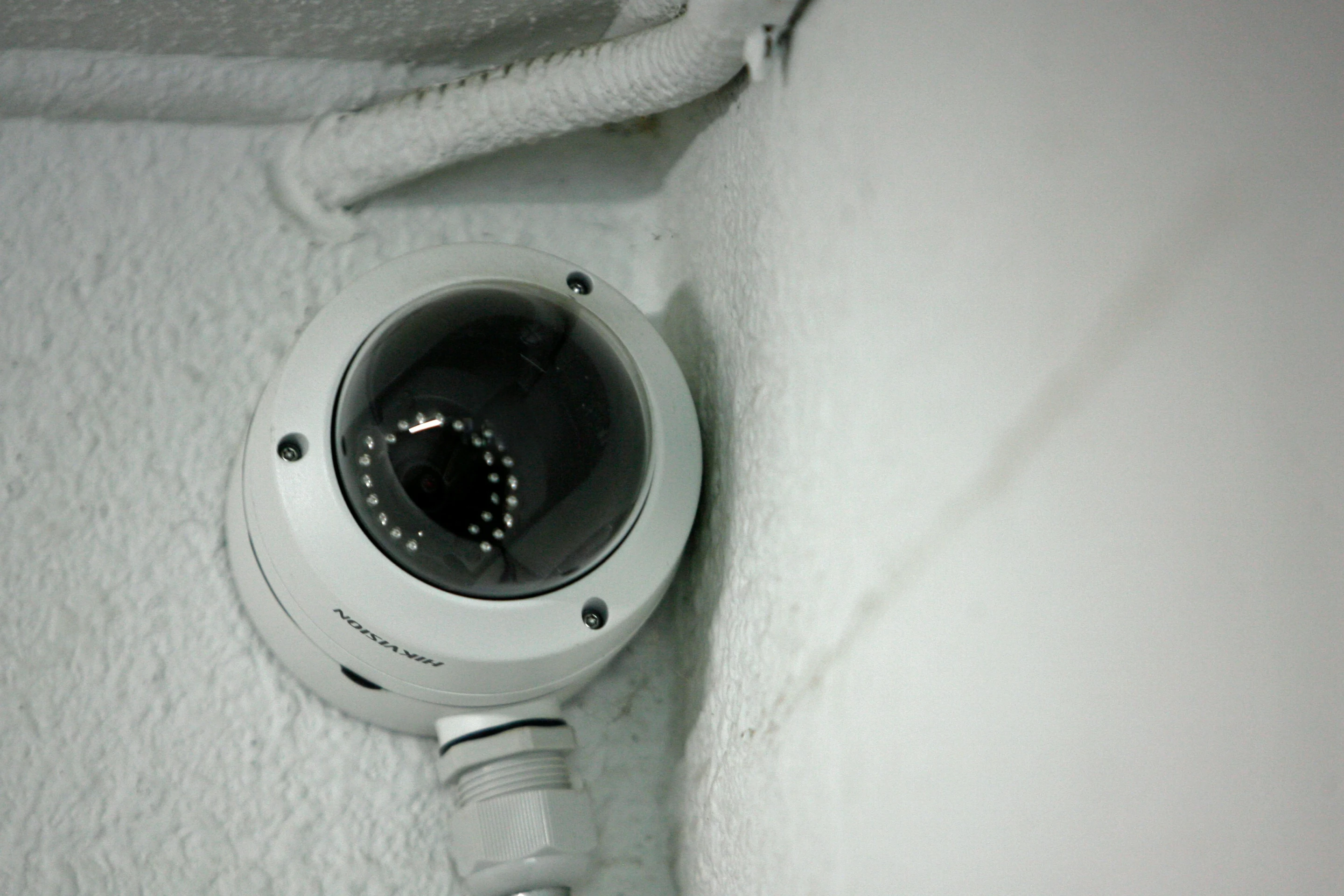
The restriction specifically names equipment from Huawei Technologies and ZTE Corporation, along with video surveillance and telecommunications equipment from Hytera Communications, Hangzhou Hikvision Digital Technology, and Dahua Technology, when used for public safety, security of government facilities, physical security surveillance of critical infrastructure, or other national security purposes.
The restriction took effect August 13, 2020. (Source: U.S. Election Assistance Commission, What is Section 889 of the FY 2019 NDAA?)
Huawei and ZTE are both headquartered in Shenzhen, China. In 2020, the FCC formally designated both companies national security threats, citing their ties to the Chinese Communist Party and military, and a Chinese law that can compel companies to hand data to the government on request.
The concern is straightforward: equipment from these vendors could be exploited for espionage against U.S. critical infrastructure, the same category correctional surveillance falls into. (Source: FCC, Protecting Against National Security Threats to the Communications Supply Chain; CNBC, China's Huawei and ZTE Officially Designated "National Security Threats" by the FCC.)
This is not a general "domestic preference" rule. It's a specific, named list of restricted equipment and vendors, tied to a specific use case: public safety and security surveillance.
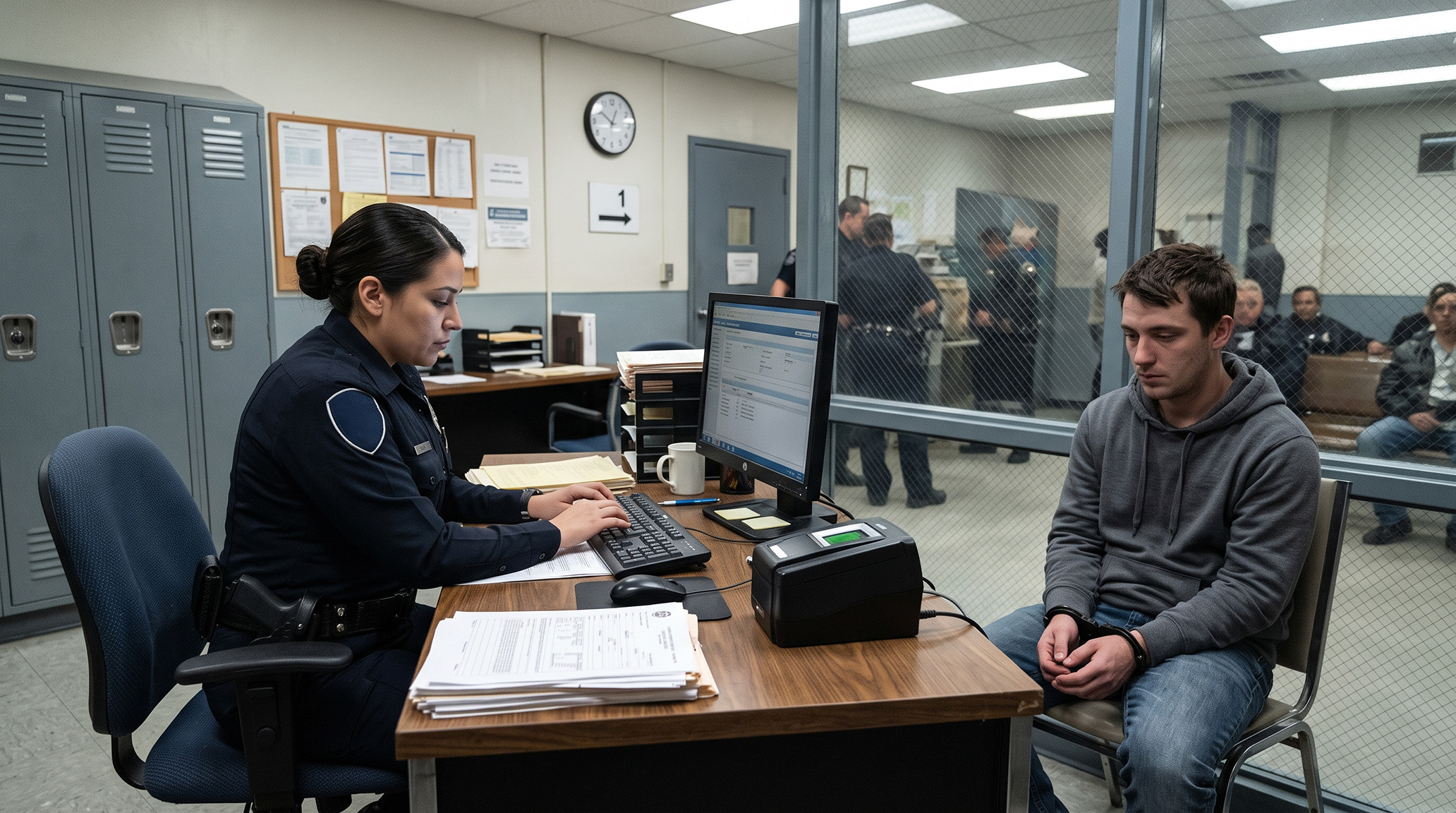
Correctional facility monitoring, cameras and surveillance technology used for the physical security of a government facility, sits squarely inside the use case the restriction describes.
Why This Applies to a County or State Facility, Not Just Federal Agencies
Section 889's restriction extends beyond federal agencies themselves to recipients of federal grant funding, per 2 CFR § 200.216. Correctional technology purchases are frequently funded, in whole or in part, through federal grant programs such as the Byrne Justice Assistance Grant, which explicitly covers equipment for corrections programs.
An agency using that funding, or other federal grant dollars, to purchase monitoring technology should confirm that the specific equipment involved doesn't fall inside the restricted list, regardless of whether the agency itself is a federal entity.
A county jail is not a federal agency, but federal grant funding can bring federal procurement restrictions along with it.
This is a distinct question from where a company's headquarters is located. Confirming supply chain origin means understanding whose components, and whose underlying manufacturing, sit inside a given piece of monitoring hardware, not just the brand name on the device.
Where the Data and Footage Actually Live
Supply chain origin is one part of the security question. Where monitoring data and footage are actually stored and processed is a related, separate question agencies should ask directly.
Data residency on infrastructure the agency controls or has vetted, rather than infrastructure a vendor does not disclose in detail, affects both security posture and an agency's ability to answer oversight or public records questions about where sensitive data lives.
What to Ask Any Vendor About Domestic Supply Chain in Corrections
Agencies evaluating monitoring technology should press vendors on supply chain and data infrastructure specifically, not accept a general "American company" claim at face value. The following questions apply regardless of which platform a facility is considering.
1. Component and Manufacturing Origin
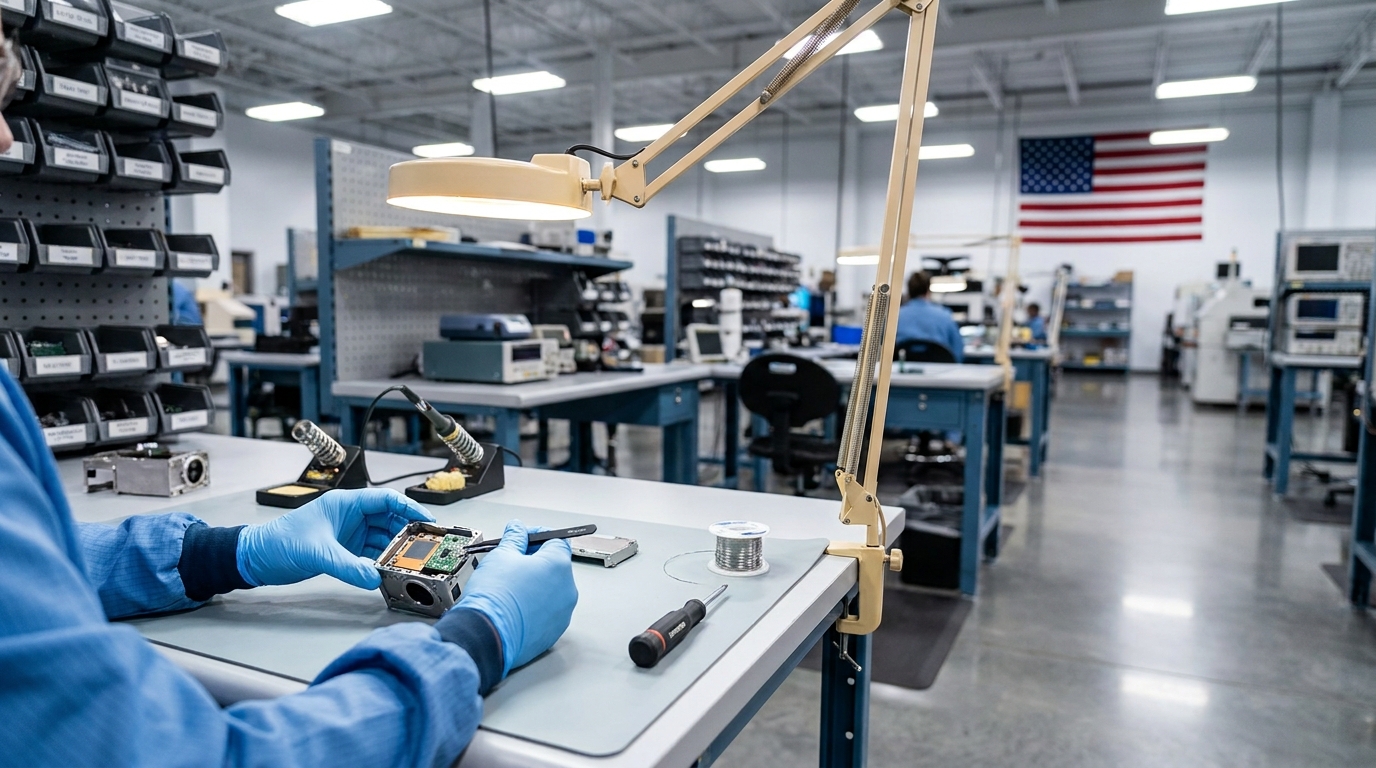
Where is the hardware actually manufactured, and does any component come from a vendor named in Section 889's restricted list?
A vendor headquartered in the United States can still source restricted components; the question is about the equipment itself, not the company's address.
2. Grant-Funding Compatibility
If this purchase is funded in whole or in part by federal grant dollars, has the vendor confirmed its equipment falls outside the Section 889 restricted list for public safety and surveillance use?
This should be a direct, documented answer, not a general assurance.
3. Data Residency and Storage
Where is monitoring data and footage actually stored and processed, and does it remain on infrastructure the agency controls or has independently vetted?
Vague answers about "the cloud" without specifying whose infrastructure warrant a follow-up question.
4. Independent Security Validation
Has the platform undergone independent security validation, such as a SOC 2 Type II audit or third-party penetration testing?
Independent validation carries more weight than a vendor's own security claims.
4Sight Labs is made in the USA, and its platforms are HIPAA compliant, SOC 2 Type II audited, and independently penetration tested, with data kept on the agency's own infrastructure. We built our supply chain and data practices around these same questions, not because they are unique to us, but because they are what agencies should confirm before any purchase, regardless of vendor.
What 4Sight Labs Does Not Claim
OverWatch® and OptiGuard™ are engineered to strengthen observation and documentation. They are support layers, not autonomous decision-makers, and staff verification and judgment remain central to every response, regardless of a device's country of origin.
- Not diagnostic: the platforms are not intended for diagnosis or treatment of any medical condition.
- Not a clinical substitute: monitored data is not a substitute for clinical evaluation by qualified medical personnel.
- Not a guarantee: no monitoring system can guarantee an outcome, and no vendor can independently guarantee grant eligibility; funding and compliance determinations rest with the relevant granting or regulatory authority.
- Not a substitute for legal review: agencies should confirm Section 889 and other procurement-restriction compliance directly with counsel, not rely solely on a vendor's self-reported compliance.
Frequently Asked Questions
Does federal law actually restrict certain surveillance equipment for correctional facilities?
Yes, indirectly. Section 889 of the FY2019 NDAA restricts specific named equipment and vendors from federal agencies and recipients of federal grant funding when used for public safety or security surveillance, which can include correctional facilities that use federal grant dollars for monitoring technology.
Which companies are named in the Section 889 restriction?
Huawei Technologies and ZTE Corporation for telecommunications equipment, and Hytera Communications, Hangzhou Hikvision Digital Technology, and Dahua Technology for video surveillance and telecommunications equipment used in covered public safety and security contexts.
Does this restriction apply even if my facility isn't a federal agency?
It can, if the purchase is funded in whole or in part by federal grant dollars, since the restriction extends to recipients of federal grant funding, not only to federal agencies themselves.
Is "domestic manufacturing" only about where a company is headquartered?
No. It's more accurate to look at where the actual hardware and its components are manufactured, and where the resulting data is stored and processed, rather than relying on a company's stated headquarters alone.
Domestic manufacturing in correctional technology procurement is less a matter of preference than a matter of confirming, directly and specifically, that a purchase complies with the federal restrictions that may already govern it, particularly when grant funding is involved.
Correctional leaders planning a technology investment can explore additional guidance in the 4Sight Labs Resource Center.