The Officer to Detainee Ratio
How Staffing Levels Shape Supervision Quality
Staffing shortfalls in correctional facilities are rarely abstract budget line items. They translate directly into how closely, and how often, officers can actually observe the people in their custody.
Jail staffing challenges are usually described in budgetary terms, vacancy rates, overtime costs, recruitment timelines. The operational question underneath those numbers is simpler: how much attention can the officers on a given shift actually give to the people they are responsible for supervising.
This discussion focuses on operational staffing and supervision considerations in custodial environments and is not intended to provide clinical, medical, or legal guidance. Staffing decisions, supervision policy, and liability questions should always be directed to qualified facility leadership, applicable policy, and agency counsel.
Why Staffing Ratios Look Different Facility to Facility
Officer-to-detainee ratios are shaped by a combination of factors: facility size, architectural design, classification levels, and the specific requirements of state or accreditation standards.
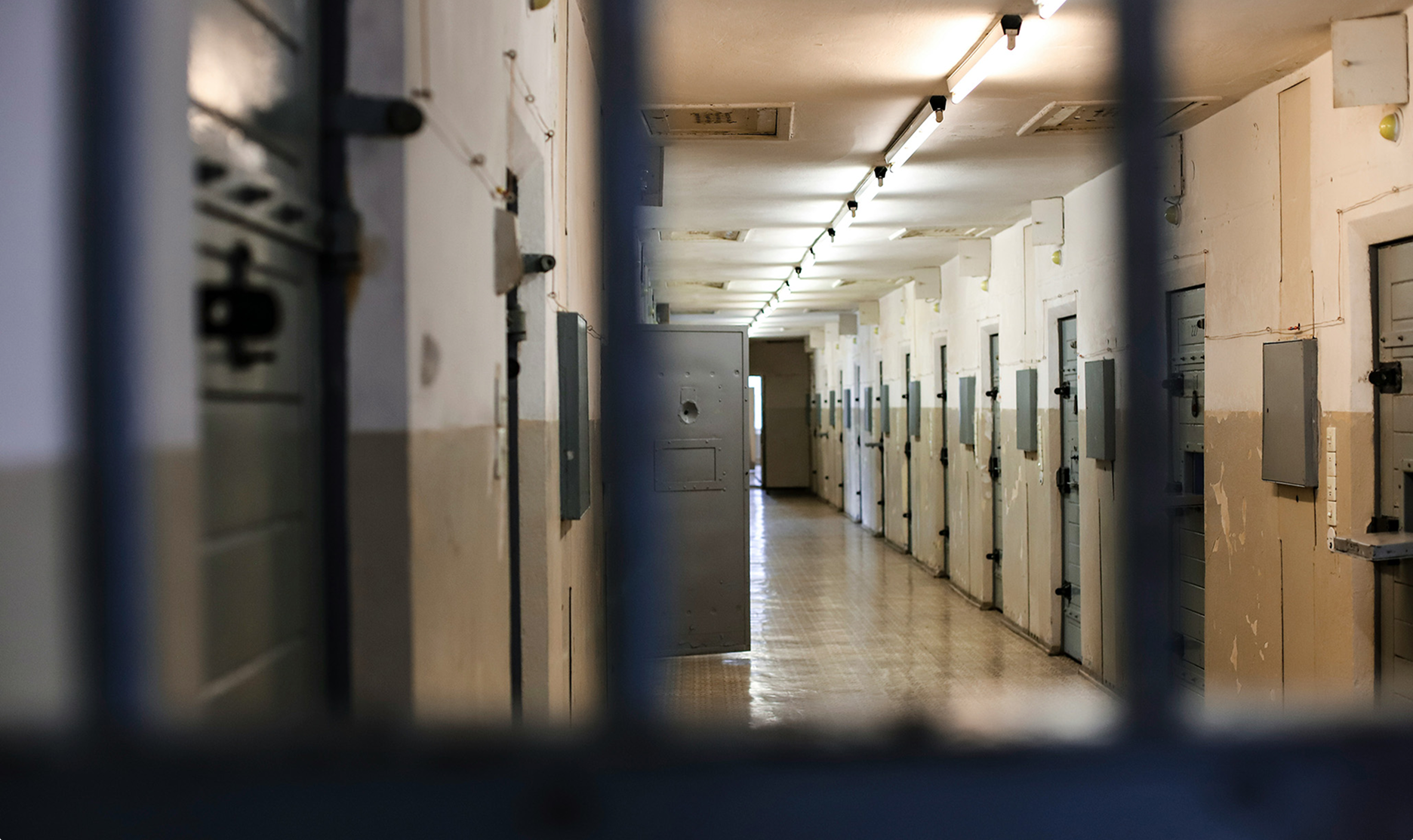
A direct-supervision pod with a single officer stationed inside the unit operates under very different practical conditions than a linear-design jail where officers conduct scheduled rounds past a series of cell fronts. Larger regional facilities may have more staff on paper, but also more housing units, more intake volume, and more competing demands on the same personnel.
Nationally, the gap this creates has been widening. At midyear 2022, local jails reported 4.0 individuals in custody for every correctional officer, up from 3.6 at midyear 2021 and 3.0 at midyear 2020, even as corrections staffing at local jails continued to decline.
Supervision quality is not simply a function of headcount.
For command staff building a staffing plan, that distinction matters: it is a function of how much attention each officer can realistically give to each individual in custody during a shift, given the physical layout, the population's classification mix, and the number of concurrent responsibilities, escorts, intake processing, court runs, and administrative tasks, that pull staff away from direct observation.
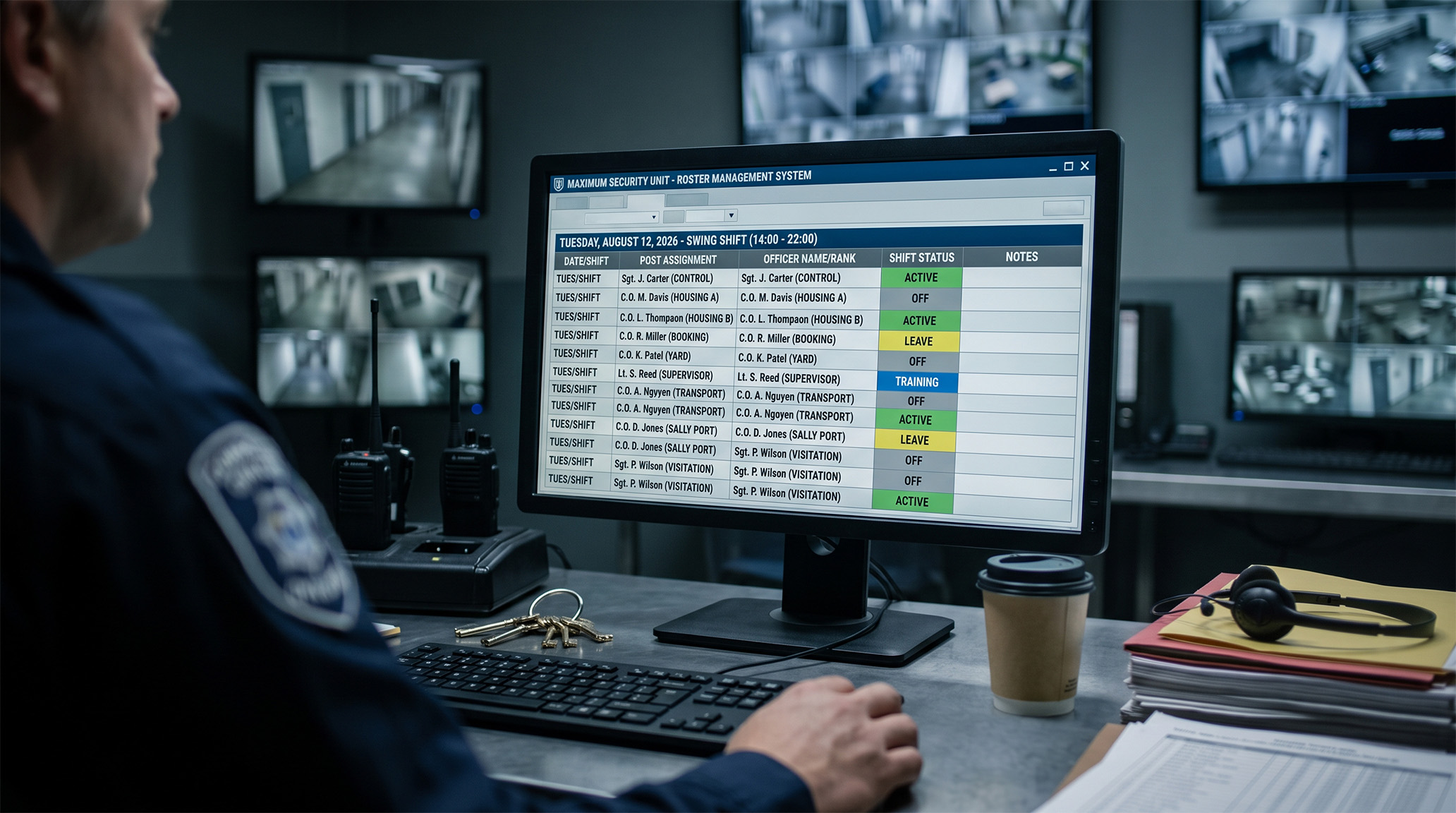
Two facilities with identical staffing ratios on a roster can deliver very different levels of actual supervision depending on these operational realities. Understanding this variability is a necessary starting point before evaluating how understaffing changes day-to-day supervision on the housing unit floor.
What Happens When a Shift Runs Short
When a shift runs below its planned staffing level, the effects rarely show up as a single dramatic failure. More often, they accumulate as a series of smaller compromises: rounds that stretch slightly longer between checks, observation logs completed a few minutes after the fact rather than at the moment of the check, or officers splitting attention across two units instead of one.
Individually, each compromise may seem minor. Collectively, they narrow the margin available for staff to notice a change in a housing unit's condition before it becomes a more serious incident.
Understaffed shifts also tend to concentrate risk during specific windows: overnight hours, weekends, or periods immediately following a facility-wide event that pulls staff away from routine duties. Fatigue compounds the problem. An officer working a mandatory overtime shift after a full rotation is operating with less capacity for sustained attention, even when following the same protocols.
For captains and lieutenants managing a short-staffed roster, this is the operational reality: command staff are frequently forced into a posture of constant prioritization, deciding which units, which tasks, and which checks get full attention and which get only the minimum required to remain compliant.
Those prioritization calls, repeated shift after shift, are where supervision quality erodes most and where systems need to come through.
Where Supervision Gaps Open Up Under Pressure
Supervision gaps under staffing pressure tend to cluster in predictable places.
- Higher-needs housing units: individuals flagged for self-harm risk, those recently booked, or those experiencing changes in condition or presentation require more frequent and more attentive checks than a general population unit. When staffing is thin, these units compete for the same limited officer attention as every other assignment on the roster.
- Shift changes and handoffs: information about a unit's condition, who was flagged for closer observation, what occurred during the prior shift, does not always transfer completely between outgoing and incoming staff, particularly when the handoff itself is compressed to cover a staffing gap elsewhere.
- Documentation drift: checks performed late or logged retroactively create a paper record that may not accurately reflect what was actually observed, which becomes a liability exposure if an incident is later reviewed.
- Physical layout: officers covering multiple units, or covering a single large unit alone, cannot be everywhere at once.
The result is not a failure of individual diligence but a structural limitation: staffing levels determine how much observation is physically possible, regardless of how committed the officers on duty are.
Extending Officer Visibility Without Adding Headcount
Technology cannot replace an officer's judgment, but it can extend what a limited staff is able to observe. Fixed-camera analytics platforms such as OptiGuard™ use a facility's existing camera infrastructure and process video on-site through a dedicated AI Edge Server, supporting continuous awareness of in-cell conditions without relying on the cloud. This gives staff a second layer of observation on units they cannot physically stand in front of at every moment.
- Shared-cell coverage: OptiGuard™ covers shared cells with up to four occupants, not just single-occupancy housing, and documents out-of-cell activity as well, including wellness checks, meal delivery, and medical cart visits.
- Privacy-preserving view: rather than displaying actual camera images, OptiGuard™ presents a darkened, silhouette-style view that shows movement and presence without exposing identifiable footage.
- On-network storage: footage and documentation stay within the facility's own network, with nothing transmitted or stored offsite, an approach agencies can point to directly when addressing privacy concerns raised by oversight bodies or the public.
For procurement teams evaluating monitoring technology under staffing pressure, wearable biometric monitoring such as OverWatch® extends this further by surfacing biometric signals, heart rate, blood oxygen levels, skin temperature, and motion, for staff review without requiring a physical check at that exact moment. Because OverWatch® operates on a long-range wireless network capable of penetrating steel and concrete, it can maintain connectivity in housing configurations where other wireless technologies struggle.
OverWatch® also integrates with Guardian RFID's zone-location tracking: when an alert triggers, it surfaces only on the handheld devices carried by staff already stationed in that zone, rather than notifying every officer facility-wide, so the one or two closest deputies are alerted instead of everyone on shift. That same integration closes a gap that acknowledgment alone cannot: an officer marking an alert as seen confirms awareness, not arrival, while scanning the Guardian RFID tag at the cell during response timestamps actual physical presence.
Together, these create a documented, verifiable record of officer movement and observation activity that supports both supervision and defensibility during incident review.
OptiGuard™ and OverWatch® are deployed across more than 80 agencies in 19 states, supporting continuous awareness for more than 50,000 individuals in custody nationwide.
None of this substitutes for adequate staffing. It does give command staff additional visibility into units they cannot cover as frequently as they would like.
Making the Staff You Have More Effective
Staffing levels are, in most facilities, a constraint that command staff manage rather than control outright. Budget cycles, hiring pipelines, and labor markets for correctional officers do not move quickly, and captains and lieutenants are generally left to make the best supervision decisions possible within whatever staffing they are given on a given shift.
This is also where reducing corrections officer burnout becomes an operational priority, not just a wellness talking point: officers stretched across double shifts and mandatory overtime are the ones least able to sustain the attentiveness understaffing already puts at risk.
Situational awareness tools are not a workaround for that constraint, but they are a way of making the staffing that exists more effective. The most useful integration of technology into a staffing-constrained environment treats it as a complement to officer judgment, not a substitute for it. A biometric intelligence platform that surfaces a change in an individual's condition still requires an officer to respond, assess the situation in person, and document the outcome.
What changes is the speed and consistency with which that officer becomes aware there is something to respond to.
For facilities operating below ideal staffing levels, that additional layer of awareness can be the difference between a gap in coverage and a gap that goes unnoticed. For command staff, that same layer of awareness doubles as a quality assurance tool, offering ongoing insight into rounds performance and compliance without adding extra workload for the officers being observed.
Correctional leaders managing staffing pressure are ultimately balancing two obligations that do not go away regardless of roster size: the obligation to supervise the people in their custody adequately, and the obligation to be able to demonstrate that supervision occurred. Technology that extends visibility and strengthens documentation supports both, without changing the underlying staffing math that command staff must still solve.
Questions to Ask Any Monitoring Vendor About Extending Officer Visibility
Facilities evaluating monitoring technology to offset staffing pressure should press on coverage and reliability specifically, not just feature lists. The following questions apply regardless of which platform a facility is considering.
1. Coverage Scaling
Does the platform scale to shared, multi-occupant housing, not just single cells?
A system built only for single-occupancy units leaves gaps in facilities where shared housing is common, precisely the units where staffing pressure is often greatest.
2. Data Residency
Is footage and observation data stored within the facility's own network, or transmitted and stored offsite?
On-network storage gives facilities a direct answer when oversight bodies or the public raise privacy concerns.
3. Wireless Reliability
Can the wireless infrastructure maintain connectivity through steel and concrete housing configurations, or does coverage degrade in exactly the units that need it most?
A monitoring layer that loses connectivity in dense housing construction provides a false sense of coverage.
4. Documentation Continuity
Does the system generate a record that holds up across shift changes and handoffs, independent of what gets verbally passed between outgoing and incoming staff?
Technology that closes the same handoff gaps that erode manual supervision is solving the actual problem, not just adding a feature.
4Sight Labs built OptiGuard™ and OverWatch® around these same questions, not because they are unique to us, but because they are the ones that matter most in a staffing-constrained environment, regardless of vendor.
What This Technology Does Not Do
OptiGuard™ and OverWatch® are engineered to extend officer visibility and strengthen documentation. They are support layers, not autonomous decision-makers, and staff verification and judgment remain central to every response.
- Not diagnostic: the platforms are not intended for diagnosis or treatment of any medical condition.
- Not a clinical substitute: monitored data is not a substitute for clinical evaluation by qualified medical personnel.
- Not a guarantee: no monitoring system can guarantee an outcome. Continuous biometric monitoring strengthens situational awareness across high-risk scenarios, giving staff the visibility to respond when conditions change. It does not replace staff judgment, staffing levels, or training.
- Not autonomous: alerts direct staff attention; they do not act on their own or make a determination about an individual's condition.
Frequently Asked Questions
Does monitoring technology reduce the number of officers a facility needs to hire?
No. Technology extends what existing staff can observe; it does not eliminate the staffing levels required for adequate supervision, escort duties, intake, and the physical presence rounds require.
Is there a legally required officer-to-detainee ratio?
Ratio requirements vary by state, accreditation standard, and facility type, and some jurisdictions set none at all. Agencies should confirm applicable requirements with their state regulator, accrediting body, or agency counsel rather than relying on a single national figure.
Can OptiGuard™ or OverWatch® replace an officer's physical rounds?
No. Both platforms are designed to extend awareness and strengthen documentation around staff observation, not replace it. Staff verification and response remain a required part of custody operations.
How does monitoring technology help specifically during short-staffed shifts?
It gives command staff a second layer of visibility into units they cannot physically cover as frequently as they would like, and a documented record of observation activity that holds up across shift changes, without adding workload for the officers on duty.
Officer-to-detainee ratios shape supervision quality, but staffing math alone does not determine how much attention any individual in custody actually receives; facility layout, population mix, and the technology in place all factor in. Facilities that extend officer visibility through tools like OptiGuard™ and OverWatch® are better positioned to make the staff they have more effective, whatever the roster looks like on a given shift.
See how OptiGuard™ and OverWatch® extend officer visibility during staffing-constrained shifts. Book a Demo to see the platform in action.
Correctional leaders seeking additional resources on staffing strategy and housing unit supervision can explore the 4Sight Labs Resource Center.