

The Concealment Problem
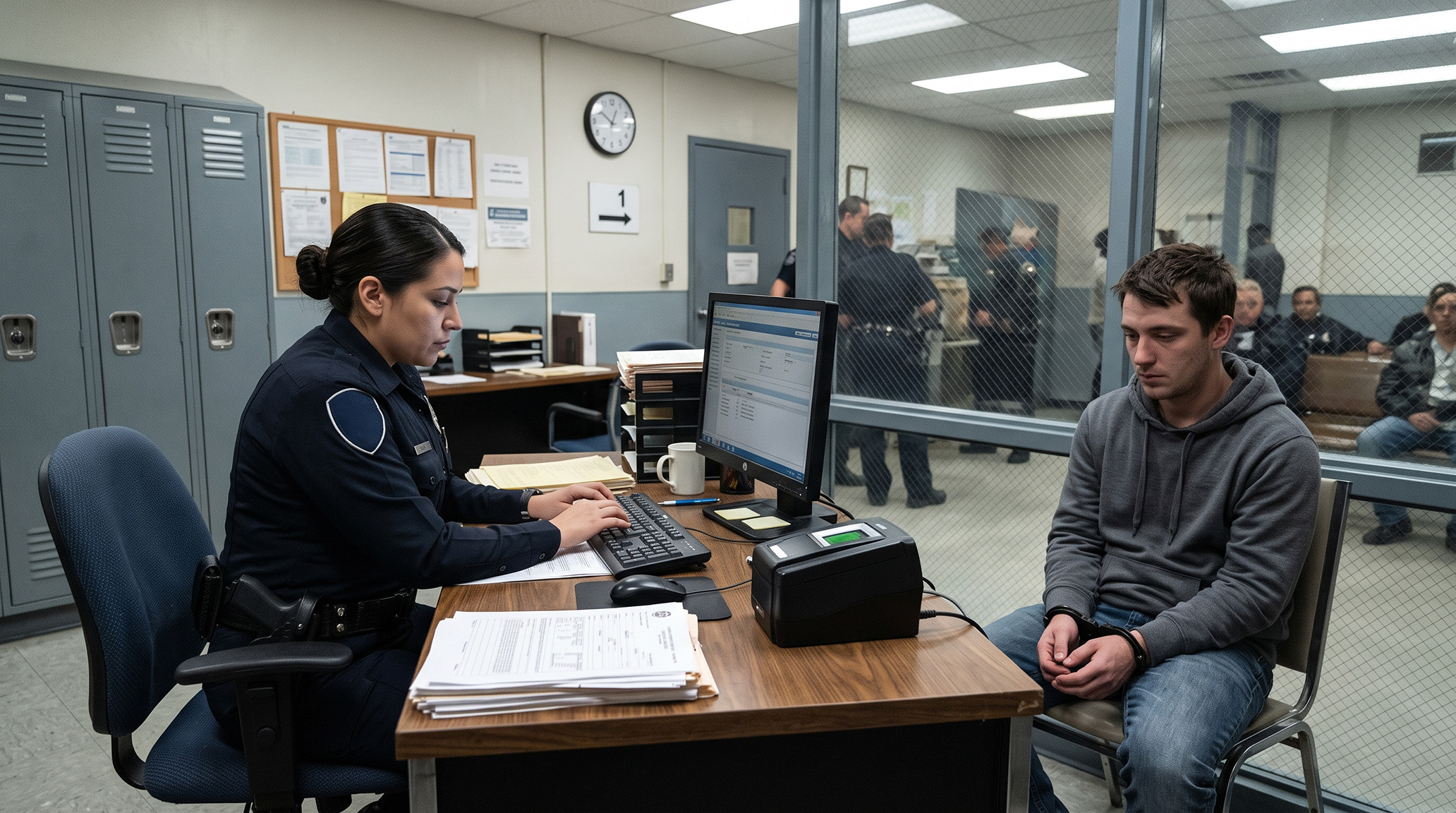
Intake Screening Alone Can't Catch Every Withdrawal Risk
Jail intake screening is often treated as the definitive check for withdrawal risk, but it is not. Intake screening is the first, and for many individuals the only, structured opportunity a facility has to identify that risk, yet it depends heavily on information individuals frequently choose not to disclose.
Jail intake screening refers to the standardized interview and instrument administered at booking to flag medical, mental health, and substance use risk before housing placement. The gap this piece addresses is not the design of that instrument, it is what happens after it is completed.
This discussion focuses on operational supervision considerations in custodial environments and is not intended to provide clinical or medical guidance. Correctional healthcare decisions, including substance use and withdrawal management, should always be directed by qualified medical professionals and applicable facility policy.
Why Disclosure at Intake Is the Exception, Not the Rule
Intake screening relies substantially on self-report, and individuals entering custody have numerous reasons to withhold accurate information about substance use.
- Fear of consequences: disclosure may affect bond decisions, housing placement, or how an individual is perceived by staff.
- Limited self-awareness: some individuals may not fully recognize the extent of their own use or dependence, particularly for substances with less visibly dramatic acute effects.
- Distrust of staff: a stressful, disorienting first encounter with the facility leaves many individuals wary of institutional staff generally.
National data on the population being screened underscores the scale of the problem: in the most recent federal survey, 63% of sentenced individuals in jail custody met clinical criteria for drug dependence or abuse. (Source: Bureau of Justice Statistics, Drug Use, Dependence, and Abuse Among State Prisoners and Jail Inmates, 2007–2009)
Whatever the underlying reason, the result is the same from an operational standpoint: intake staff are working from an incomplete picture, no matter how thorough their screening protocol is or how skilled their interviewing technique.
This is not a failure of the screening process itself. It is an inherent limitation of any process built primarily around voluntary disclosure at a moment when the person being screened has strong incentives not to disclose.
For intake staff and classification officers, this is a structural reality worth naming directly, no amount of additional training changes what a person is willing to disclose under these conditions.
The Limits of Screening Built on Self-Report
Even well-designed intake screening instruments face structural limits. They are administered once, typically within hours of admission, by staff who may be managing a high volume of intakes and who are working from a standardized set of questions rather than an extended clinical evaluation.
The instrument can only surface what the individual is willing and able to report at that specific point in time. This means intake screening functions best as an initial risk indicator rather than a definitive determination.
A negative or minimal-risk intake result does not close the question of withdrawal risk. It reflects a single conversation, conducted at the moment the person being screened had the least incentive to be honest.
For correctional health administrators setting screening policy, this distinction matters: recognizing this limitation is not a criticism of intake staff or screening protocols. It is a recognition that safety and welfare monitoring needs to extend meaningfully beyond the intake interview itself.
How Risk Emerges Long After the Intake Interview
Changes in condition or presentation associated with withdrawal do not necessarily emerge on a predictable timeline tied to intake. Depending on the substance involved and the individual's pattern of use, changes associated with withdrawal can begin hours after admission or may not become apparent for a day or more, often well after the intake interview has concluded and the individual has been placed in general or specialized housing.
This delayed and variable onset is precisely what makes concealment at intake operationally significant.
An individual who appears stable and shows no outward signs of distress during intake screening may, over the following hours, begin to show changes associated with physiological distress that were not present, or not detectable, at the time they were screened.
For housing unit staff, rather than intake staff, this means they are often the ones positioned to observe these changes, provided they have the tools and the awareness to do so.
The Risk Window Screening Alone Can't Close
The interval between intake screening and the emergence of changes associated with withdrawal represents a distinct risk window, one that exists regardless of how well intake screening was conducted.
During this window, an individual may be housed based on information gathered at intake that no longer reflects their actual condition, and staff supervising that housing unit may have no reason to apply heightened observation unless something is flagged for them.
This window is a structural feature of any system that treats intake as a single point-in-time assessment rather than the beginning of an ongoing observation process.
Closing this window requires supervision practices, and ideally supporting technology, that extend safety and welfare monitoring across the full period during which changes associated with withdrawal are most likely to emerge, not just the intake interview itself.
Extending Awareness Beyond the Intake Interview
Addressing the concealment problem does not require a more aggressive intake interview. It requires supervision that continues, in some form, beyond it.
Continuous biometric monitoring of physiological signals such as heart rate, blood oxygen, skin temperature, and other biometrics, of the kind supported by the OverWatch® platform, is designed to surface biometric signals for staff review as they occur, extending vital signs monitoring and wellness awareness well beyond the intake interview itself, rather than relying solely on point-in-time observation or self-report. OverWatch® currently supports continuous awareness for more than 50,000 individuals in custody nationwide, across more than 80 agencies in 19 states.
- Continuous physiological monitoring: heart rate, blood oxygen, skin temperature, stress level, sleep quality, and other biometrics are surfaced for staff review as they occur, not just at intake.
- No added workload: because this awareness runs continuously in the background, it adds no extra workload to intake or housing unit staff, who remain free to focus on direct interaction with the people in their custody.
- Not a screening replacement: the platform supplements, rather than replaces, the intake process itself.
None of this diagnoses, screens for, or replaces clinical evaluation, and it does not substitute for medical judgment.
What it may do is support earlier intervention by giving housing unit staff visibility into changes that would otherwise depend entirely on an individual's willingness to report discomfort or on a staff member's ability to notice a change during a routine round. For facilities managing a population where intake disclosure cannot be assumed to be complete or accurate, that additional layer of awareness addresses a gap that screening alone cannot close.
Questions to Ask Any Monitoring Vendor About Withdrawal Risk Awareness
Facilities evaluating monitoring technology to help close the post-intake risk window should press on continuity and calibration specifically, not just feature lists. The following questions apply regardless of which platform a facility is considering.
1. Signal Scope
Does the platform surface the physiological signals most associated with withdrawal risk, such as heart rate, blood oxygen, skin temperature, and other biometrics, or only a narrower set?
A platform limited to a single signal type provides a much thinner picture of an evolving physiological change than one that surfaces multiple signals together.
2. Continuity of Coverage
Does monitoring continue automatically after intake, across housing placement and shift changes, without requiring staff to re-initiate it?
A system that lapses at any handoff point recreates the same gap the technology is meant to close.
3. Alert Calibration
How does the vendor calibrate alerts to reduce false positives without missing early signs, and is that calibration disclosed?
Agencies should be able to ask how a vendor balances sensitivity against alert volume, not simply accept that the system "works."
4. Workload Impact
Does using the platform add documentation or response steps to intake and housing unit staff's existing workload, or does awareness run in the background?
A tool that adds meaningful new administrative burden works against the same staffing constraints that make continuous awareness valuable in the first place.
4Sight Labs built OverWatch® around these same questions, not because they are unique to us, but because they are the ones that matter most when intake disclosure cannot be assumed to be complete, regardless of vendor.
What This Technology Does Not Do
OverWatch® is engineered to extend awareness beyond the intake interview. It is a support layer, not an autonomous decision-maker, and staff verification and clinical judgment remain central to every response.
- Not diagnostic: the platform is not intended for diagnosis or treatment of any medical condition, including substance withdrawal.
- Not a clinical substitute: monitored data is not a substitute for clinical evaluation by qualified medical personnel.
- Not a guarantee: no monitoring system can guarantee an outcome. Continuous biometric monitoring strengthens situational awareness across high-risk scenarios, giving staff the visibility to respond when conditions change. It does not replace staff judgment, staffing levels, or training.
- Not autonomous: alerts direct staff attention; they do not act on their own or make a determination about an individual's condition.
Frequently Asked Questions
Does intake screening alone reliably identify everyone at risk of withdrawal?
No. Intake screening depends substantially on self-report, and individuals frequently have reasons, ranging from fear of consequences to genuine distrust of staff, not to disclose accurate information at that specific moment.
How long after intake can withdrawal symptoms appear?
It varies by substance and pattern of use. Changes in condition can begin within hours of admission or may not become apparent for a day or more, often after the individual has already been placed in general or specialized housing.
Does continuous biometric monitoring diagnose withdrawal?
No. Platforms such as OverWatch® surface physiological signals such as heart rate, blood oxygen, and skin temperature for staff review. Diagnosis and treatment remain the responsibility of qualified medical personnel.
Does monitoring technology add workload for intake or housing unit staff?
No. Continuous awareness runs in the background and does not require staff to initiate or maintain it, leaving them free to focus on direct interaction with the people in their custody.
Concealment at intake is not a problem that better questioning alone can solve, because it is rooted in the incentives and circumstances of the individual being screened rather than in the design of the screening instrument. Correctional health administrators seeking to reduce withdrawal-related risk should treat intake as the beginning of an observation process, not its conclusion, and should evaluate whether their facility's supervision practices extend meaningfully into the hours and days that follow.
See how OverWatch® extends awareness beyond the intake interview. Book a Demo to see the platform in action.
Correctional leaders seeking additional resources on custodial safety and welfare awareness can explore the 4Sight Labs Resource Center.


.jpg)