Night-Shift Supervision Challenges in High-Risk Housing Units
.jpg)
Night-Shift Supervision Challenges in High-Risk Housing Units
Night-shift operations in detention present unique supervision challenges for high-risk housing. Learn how agencies maintain awareness when staffing levels are reduced.
Detention facilities do not pause at night. The individuals assigned to high-risk housing units remain in withdrawal, under behavioral observation, or in self-harm monitoring placements through every overnight shift. But the staffing and operational environment that surrounds those individuals changes significantly after dark. For command staff, that combination, high-risk detainees plus reduced staffing plus reduced facility activity, is one of the most consequential supervision challenges in modern detention operations.
This discussion focuses on operational supervision considerations within detention facilities and is not intended to provide clinical or policy guidance.
How the Night Shift Changes the Supervision Equation
Daytime operations in a detention facility are characterized by movement, staff overlap, and a higher density of personnel throughout the building. Night-shift operations are different in nearly every dimension that affects supervision quality.
Staffing levels are typically reduced. Officers may be responsible for supervising multiple areas simultaneously. Administrative and support personnel are not on duty. Medical staff may be on-call rather than on-site. The facility environment quiets, but the risk profile of individuals in high-risk housing does not.
These are not exceptional circumstances. They are the standard operating conditions of jail staffing challenges at night, and they create a supervision environment that is genuinely more demanding than what officers face during peak staffing hours.
For individuals in detox observation, suicide watch placements, or behavioral monitoring units, the overnight period is particularly significant. Withdrawal progressions, self-harm impulses, and cardiac events do not observe shift schedules. The risk is continuous. The supervision resources available to respond to it are not.
Observation Rounds During Overnight Hours
Observation rounds remain the primary supervision mechanism during night shifts, and their operational importance increases as staff density decreases. During overnight operations, officers visually observe detainees, confirm responsiveness, and document housing unit conditions in facility logs.
Many detention facilities establish policies governing jail observation rounds requirements, informed by guidance from organizations such as the American Correctional Association and the National Institute of Corrections. For high-risk housing placements, these intervals are typically more frequent than for general population units.
The challenge is that reduced staffing and expanded supervisory responsibilities can place pressure on an officer’s ability to maintain those intervals consistently across all high-risk placements simultaneously. An officer covering multiple observation cells, a behavioral unit, and a standard housing area at 3 a.m. is managing a supervision footprint that, under ideal conditions, would require more personnel.
This does not reflect a failure of professionalism. It reflects the reality of correctional staffing shortages that agencies across the country are navigating. But it does mean that detention leadership cannot address overnight supervision challenges through policy alone.
The Structural Visibility Problem Does Not Improve at Night
The architectural limitations that constrain supervision during daytime operations, tiered cell layouts, reinforced concrete walls, steel security doors, obstructed corridors, do not change after dark. In some respects, reduced lighting and reduced foot traffic can make the visibility gaps more pronounced.
Officers conducting overnight rounds are navigating the same physical environment with fewer colleagues, covering more ground, and doing so during the hours when physiological distress is statistically more likely to escalate and less likely to be observed.
For detention administrators responsible for monitoring high-risk housing units, this is not a hypothetical concern. It is the operational reality that underlies a significant portion of in-custody deaths that have driven federal investigations, consent decrees, and civil litigation against detention facilities in recent years.
How Technology Addresses the Overnight Gap
The growing adoption of wearable monitoring technology in correctional settings is driven, in substantial part, by what it can do during the hours when staffing is thinnest and supervision continuity is hardest to maintain.
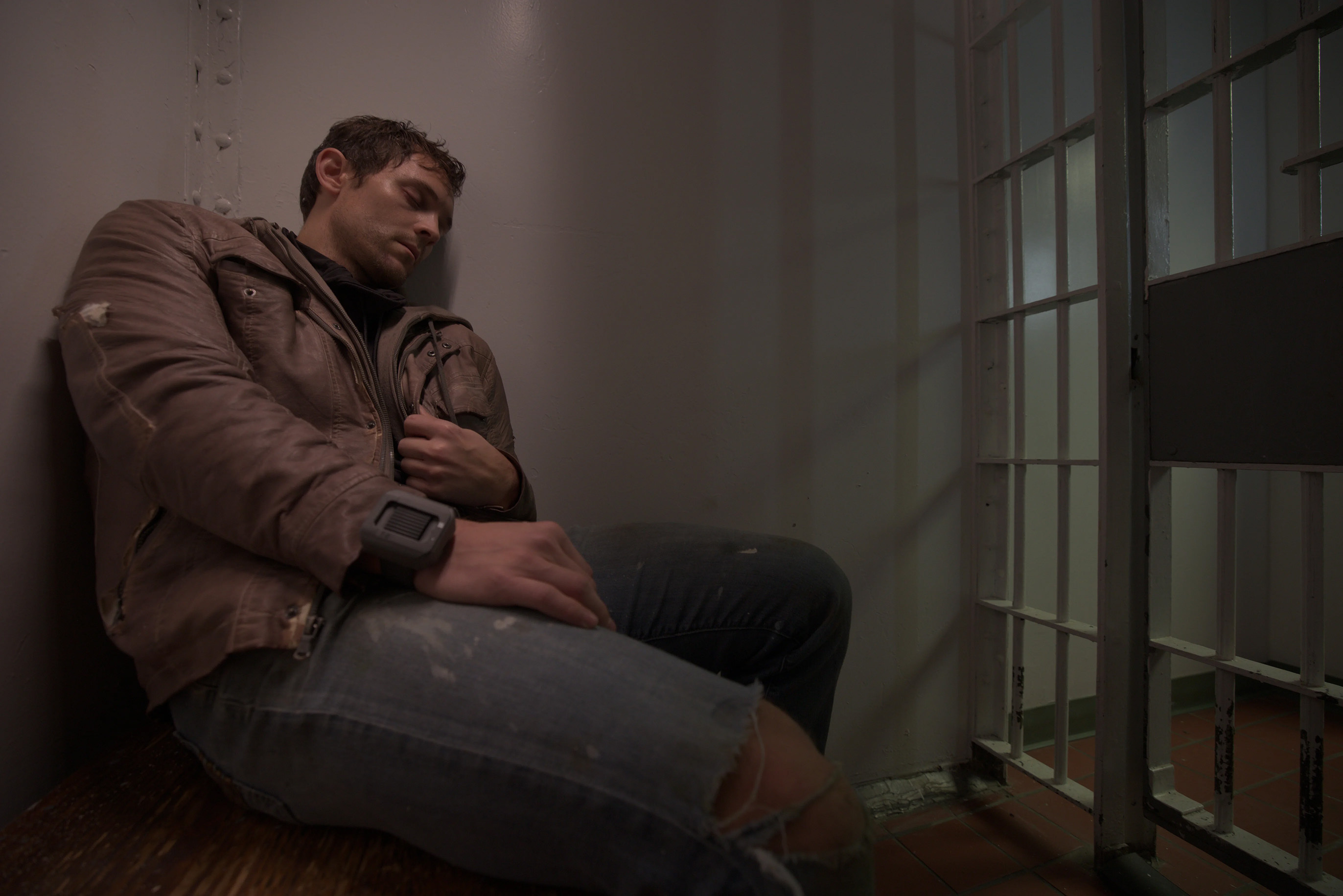
Systems such as OverWatch®, part of the Unified Correctional Biometric Platform developed by 4Sight Labs, provide continuous biometric monitoring regardless of the time of day. Heart rate trends, blood oxygen levels, skin temperature, and motion activity are tracked continuously, and alerts are generated when monitored values change significantly, notifying the officer on duty that attention may be warranted.
That alert is triggered by the detainee’s condition, not by a scheduled round interval. At 2 a.m., when a single officer is covering multiple housing areas, a system that actively signals when something has changed is operationally different from a system that relies on that officer to discover a problem during the next walk-through.
OverWatch® uses LoRaWAN long-range wireless technology, engineered to penetrate steel and concrete reliably, so alerts reach staff consistently even in the most structurally complex housing environments.
Fixed-Environment Monitoring: Eyes Inside the Cell
Wearable monitoring provides physiological awareness. It does not provide visual awareness of what is happening inside a cell. Fixed-environment monitoring technologies address this gap.
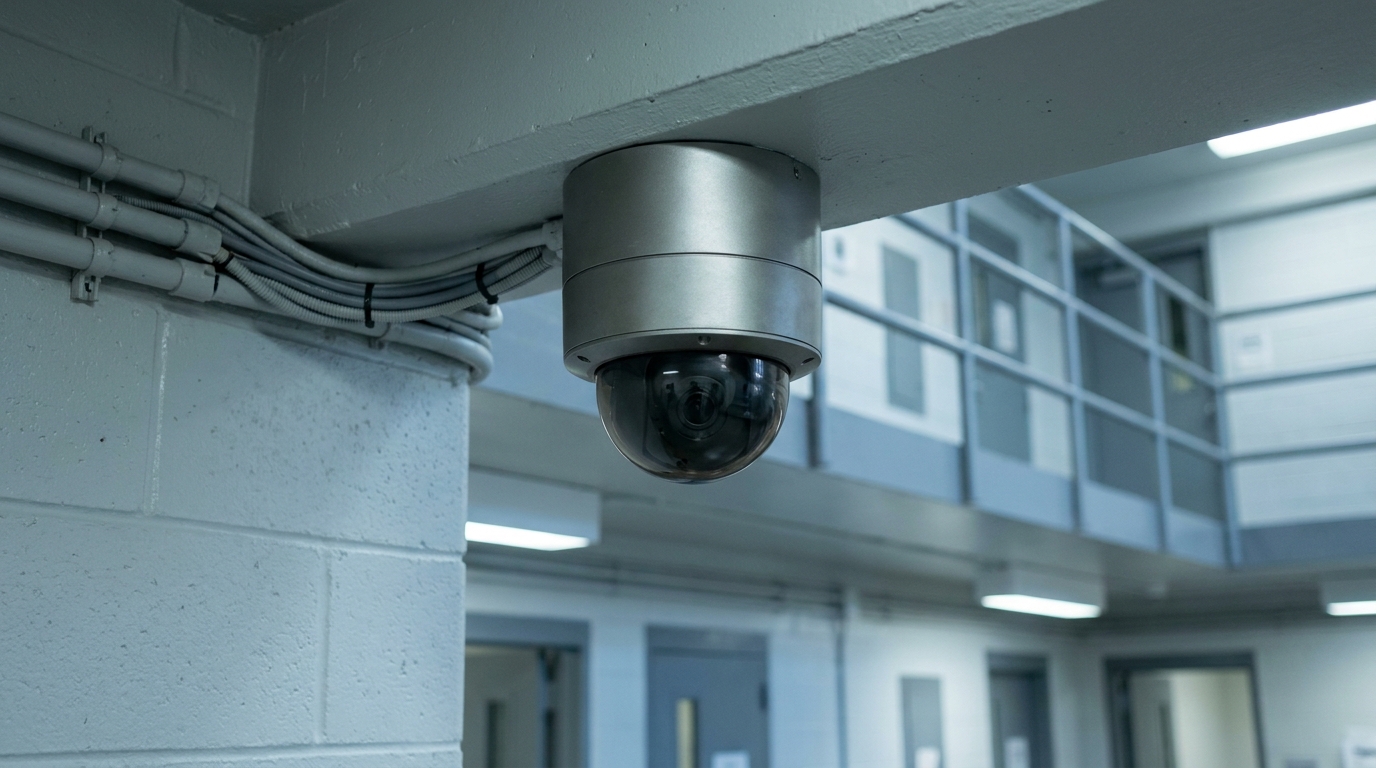
OptiGuard™ uses existing camera infrastructure to provide continuous liveness detection within housing cells, detecting movement patterns and breathing-related motion without requiring new cameras, hardware replacements, or changes to existing video management systems. When an individual in a monitored cell stops moving or when normal breathing patterns are absent, the system generates an alert.
For overnight operations in high-risk housing environments, the combination of OverWatch® and OptiGuard™ provides a layered awareness platform that operates continuously, regardless of observation round intervals, staffing levels, or the structural limitations of the housing unit.
Documentation That Protects Staff
One often-overlooked benefit of continuous monitoring technology during overnight operations is the documentation record it creates. Every alert, every response, every timestamped system event is logged automatically, producing an objective record of monitoring activity throughout the shift.
For detention agencies facing post-incident review or litigation following an overnight custody event, this record is operationally significant. It demonstrates that institutional systems were monitoring detainee condition continuously, not just at observation round intervals. And it provides staff who responded appropriately in the middle of the night with an objective record of their actions. That documentation does not replace officer accountability. It supports it.
Planning for the Shift Where Risk Is Highest
Addressing jail staffing challenges during overnight hours requires more than scheduling adjustments. It requires a supervision architecture that acknowledges what staffing alone cannot provide and deploys technology to fill those gaps systematically.
Agencies currently using the Unified Correctional Biometric Platform, which monitors more than 50,000 individuals in custody across more than 72 jails in 18 states, have demonstrated that this approach is viable at operational scale. The platform’s 99.99% system uptime ensures that monitoring continuity is maintained through overnight shifts without interruption.