Detainee Wearable Monitoring
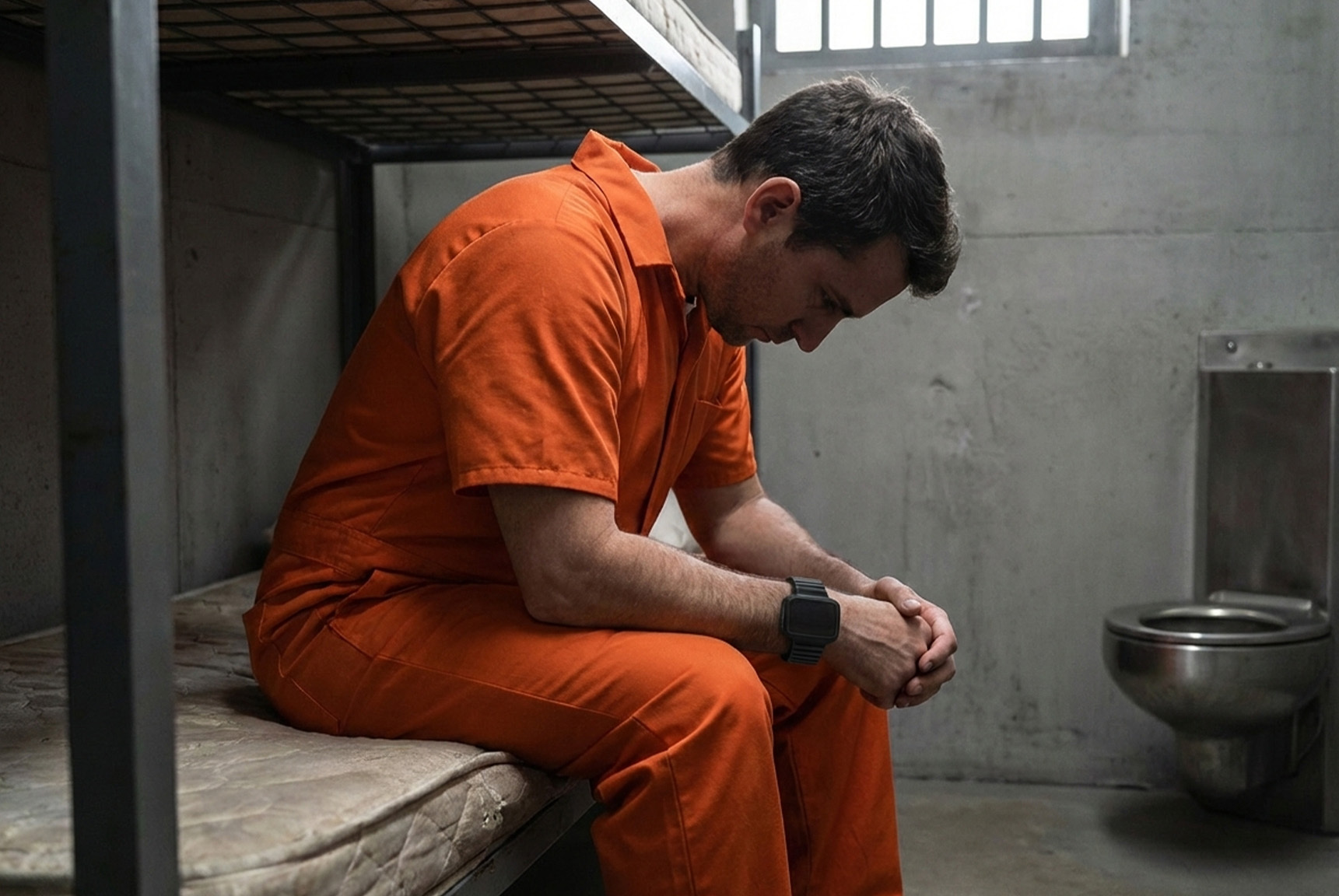
Covering the Highest-Risk Window in Custody
Detainee wearable monitoring means a wrist- or ankle-worn sensor is issued at booking, so staff have continuous safety and welfare oversight through the first days of custody. OverWatch® by 4Sight Labs analyzes multiple biometric and motion signals to spot patterns that may call for a physical welfare check. When it finds one, staff get a notification to check on the person, and every step is time-stamped in the record.
Why "detainee" changes the question
A detainee is someone who has just arrived. At this point, staff know the least about them. The intake screening is only minutes old, and whatever happened before the arrest may still be playing out. That's why intake and booking carry the most uncertainty in custody, and why 4Sight Labs uses the word on purpose. OverWatch® has monitored 70,000+ individuals as of October 2026, and for many agencies, monitoring starts at the door. This article covers wearable monitoring in that early window.
What does detainee wearable monitoring look like at booking?
The sensor is issued during intake, along with the property inventory and the screening questions. It can be worn on the wrist or ankle, and staff choose the placement for each person. From that moment, the OverWatch® sensor works in the background. As the person moves from booking to a holding cell to a housing unit, the sensor moves with them. Nothing has to be set up again in a new room.
What do staff actually see?
A notification, not a medical reading. Staff are never shown physiological values, thresholds, or trends. When the system spots a pattern that may call for a welfare check, staff get a notification that names the person and their location zone and tells them to check on that person in person. The notification doesn't say what triggered it.
That matters in a holding cell. A change can develop in the time between rounds, and the notification reaches staff without waiting for the next check. Agency policy decides what happens next, and every response is time-stamped.
- Issued at booking, with placement chosen by staff.
- Continuous monitoring through holding, classification, and housing.
- A notification that directs staff to do a physical welfare check.
- A time-stamped response kept in the record.
Which detainees are monitored?
Deployment is risk-based, and most agencies start with the intake population: booking, observation cells, and other housing their own criteria identify as higher risk. Some agencies monitor every new arrival for a set period. Others select people based on screening results. Both approaches run on the same platform, which is in use in county, state, and private facilities today.
Because the sensor is issued during intake, there's no separate workflow. It's one more item on the booking checklist, and the dashboard updates as soon as the band is assigned.
How does the data move, and who can see it?
OverWatch® runs on its own wireless network, built to work through steel and concrete without facility Wi-Fi. You can see the setup on our how it works page. Everything lands on one command dashboard that shows notifications, location zones, and device status.
For agencies that already use Guardian RFID, notifications can also reach Spartan handhelds through the Command Cloud® mobile app. This is optional, and OverWatch® works fully without it.
Data is encrypted while it moves and while it's stored. 4Sight Labs maintains an annual SOC 2 audit program, the platform is architected to support HIPAA-compliant safeguards, and access is limited to safety and welfare records. OverWatch® is also built to connect with the jail management and records systems your agency already uses, so the record can follow the detainee.
Detainee biometric wristband and detainee wristband monitoring
Both phrases describe the same sensor issued at intake. A detainee biometric wristband is the OverWatch® device assigned at booking. "Biometric" here has nothing to do with fingerprints or face scans: the band is assigned to one person and isn't used to identify anyone.
Detainee wristband monitoring is what the shift looks like with it running. Before the first round, the incoming officer sees on one screen who is monitored, where they are, and which devices need attention. Shift handover becomes a quick look at the dashboard instead of a verbal list, and the outgoing officer's notifications and responses are already in the record. If a person moves between zones during classification, their record and zone update together.
Does the sensor hold up through the first days?
The band is built with 250 lb pull strength to resist tampering, and the battery lasts 14 days. It has a 0.006% tamper-removal rate as of October 2026. If a device is damaged or its battery runs low, staff get a system notification, so the issue is documented instead of discovered at the next round.
How does it fit with rounds and cameras?
Detainee wearable monitoring supports direct observation. It doesn't replace the rounds your policy requires, and required check intervals vary by state. Our guide to state jail observation compliance compares those rules side by side.
OptiGuard™ adds a camera layer in intake and observation cells. It applies Liveness-Detection™ to the feeds from your existing cameras, looks for patterns consistent with reduced movement, and notifies staff to check the cell in person. It also documents out-of-cell events, all on the same dashboard.
Why OverWatch®?
OverWatch® is in use at 80+ agencies in 19 states and has monitored 70,000+ individuals as of October 2026, with 297+ early interventions as of October 2026. It's also backed by 5M+ hours of monitoring data. 4Sight Labs has been an Axon technology partner since 2022.
The sensor is designed and assembled in the USA, with a controlled hardware and firmware supply chain.
The bottom line
The first days of custody are when staff know the least about a person. Detainee wearable monitoring covers that window: a band issued at booking, coverage that follows the person from holding to housing, and a time-stamped record of every notification and response. It fits into the intake process you already run.
Want to see a booking-to-housing workflow? Schedule a demonstration with 4Sight Labs.
Frequently Asked Questions
When is the sensor issued?
At booking, during intake processing, or when a person moves into a monitored housing area. Staff choose wrist or ankle placement for each person.
Does detainee wearable monitoring replace intake screening?
No. Screening continues under policy. After screening, the sensor adds ongoing monitoring and a notification that directs staff to do a physical welfare check when one may be needed.
Can we monitor every new arrival?
Yes. Some agencies monitor all new arrivals for a set period, while others select people based on screening results. The platform supports either approach.
Is it a release tracker?
No. It's a safety and welfare oversight tool for people inside the facility, not a court-ordered location monitor.
Are OverWatch® and OptiGuard™ medical devices?
No. OverWatch® and OptiGuard™ are not medical devices and are not intended to diagnose, treat, cure, predict, or prevent any disease or condition. Correctional staff are not shown physiological values, clinical thresholds, diagnoses, or medical interpretations. Notifications direct staff to conduct a physical welfare check under agency policy, and the products do not replace clinical judgment, medical staff, or required observation rounds.