What Purpose-Built Correctional Monitoring Actually Delivers
Key Features That Matter in High-Stakes Environments
As correctional agencies evaluate biometric monitoring technology, one distinction increasingly defines the quality of that evaluation: whether a system was purpose-built for custody environments or adapted from technology designed for a different use case. That distinction shapes nearly every aspect of how the system performs, from signal reliability inside reinforced structures to data security to how well the hardware holds up under continuous operational deployment.
What Makes Correctional Monitoring Truly Purpose-Built for Detention
Consumer and commercial monitoring technologies are designed to perform reliably in predictable environments: open spaces, minimal interference, cooperative users, and controlled deployment conditions. Detention facilities are none of those things.
Reinforced concrete and steel infrastructure create signal interference that consumer wireless protocols are not built to overcome. High-acuity populations may resist or attempt to remove monitoring devices. Continuous deployment across 24-hour shift cycles places hardware under sustained physical and operational stress that commercial product testing does not anticipate.
A monitoring system purpose-built for custody environments is engineered to account for these realities from the start. One adapted from consumer or clinical technology may meet minimum technical specifications while failing the operational demands of a working detention facility.
The features that differentiate purpose-built systems are not marketing distinctions. They are the characteristics that determine whether a system works when coverage matters most.
The Wireless Architecture That Keeps Correctional Monitoring Connected
The ability of a monitoring system to transmit data continuously through steel and concrete is a threshold requirement for any deployment in a modern detention facility, not a secondary specification.
Consumer wireless protocols designed for open environments frequently require dense networks of relay hardware to maintain coverage inside reinforced structures. That infrastructure dependency increases deployment complexity, maintenance burden, and the number of potential failure points in the alert path.
OverWatch® uses long-range wireless architecture specifically engineered for custody environments, maintaining reliable connectivity through steel and concrete with a small number of routers across a full facility. The result is continuous biometric monitoring without signal gaps, without fragile communication dependencies, and without the recurring infrastructure overhead that accompanies consumer-grade systems.
For agencies evaluating monitoring platforms, the question is not only whether a system can connect, but whether it stays connected across every housing unit, every shift, and every structural condition inside the facility. A full comparison of wireless architectures used in custodial monitoring is available here.
How OverWatch® Delivers Device Reliability Across High-Acuity Populations
A monitoring device that is frequently removed, tampered with, or requires constant battery replacement creates operational gaps at precisely the moments when continuous coverage matters most. Device reliability in a custodial population is not an assumption. It is an outcome that must be demonstrated through documented deployment.
Across more than 50,000 individuals monitored in custody, OverWatch® has demonstrated a device removal rate of less than 0.01%. That figure reflects a device designed with custodial populations and custodial conditions in mind, and an operational record documented across real deployments in working detention facilities.
Combined with a 14-day battery life, OverWatch® minimizes the operational burden on staff while maintaining continuous biometric monitoring through intake, detox, suicide watch, and other high-risk placements. That 14-day runtime eliminates the frequent battery exchanges that interrupt coverage and increase staff workload in consumer-adapted systems.
HIPAA Compliance, SOC 2 Certification, and U.S. Supply Chain Integrity
As federal and state interest in correctional monitoring systems grows, compliance readiness and data security have become central evaluation criteria, not optional considerations.
The Unified Correctional Biometric Platform operates within a HIPAA-aligned framework, with data hosted on Microsoft Azure Government cloud infrastructure. The system is SOC 2 compliant, and OverWatch® is fully U.S.-designed and U.S.-manufactured, operating under a controlled hardware and firmware supply chain.
For agencies subject to federal procurement requirements or operating in environments where data sovereignty is a concern, those certifications and supply chain controls are not incidental. They are the conditions under which a monitoring platform qualifies for deployment. A system that cannot meet these standards places agencies in a position of ongoing compliance vulnerability, regardless of how well it performs technically.
This end-to-end supply chain control also matters in an environment where federal attention to technology procurement integrity is increasing. 4Sight Labs' position as a fully U.S.-designed and manufactured platform provides a level of procurement clarity that off-shore or partially adapted systems cannot replicate.
How Correctional Monitoring Integrates With JMS, OMS, EMR, and CMS Systems
A monitoring system does not operate in isolation. In a working detention facility, it must function alongside Jail Management Systems (JMS), Offender Management Systems (OMS), Electronic Medical Records (EMR), and Case Management Systems (CMS), sharing data, supporting documentation workflows, and reducing duplication of manual entry.
The Unified Correctional Biometric Platform supports secure integration with these existing systems through SFTP and secure API connections. Biometric alert data, wellness check records, and event timelines are accessible within the facility's existing documentation environment, not siloed in a separate platform that staff must check independently.
That integration capability is particularly important when evaluating total operational fit. A monitoring platform that creates additional data entry burden or requires staff to maintain parallel documentation workflows is unlikely to sustain consistent use under the staffing and operational pressures of a real shift.
OverWatch® and OptiGuard™: A Layered Approach to Correctional Monitoring
Individual monitoring capabilities address individual risk factors. A platform that layers multiple capabilities creates a more comprehensive view of conditions inside high-risk custody environments.
OverWatch® provides continuous physiological monitoring of the individual, including heart rate, blood oxygen (SpO₂), skin temperature, and motion, delivered to staff in real time through a long-range wireless network engineered for detention environments.
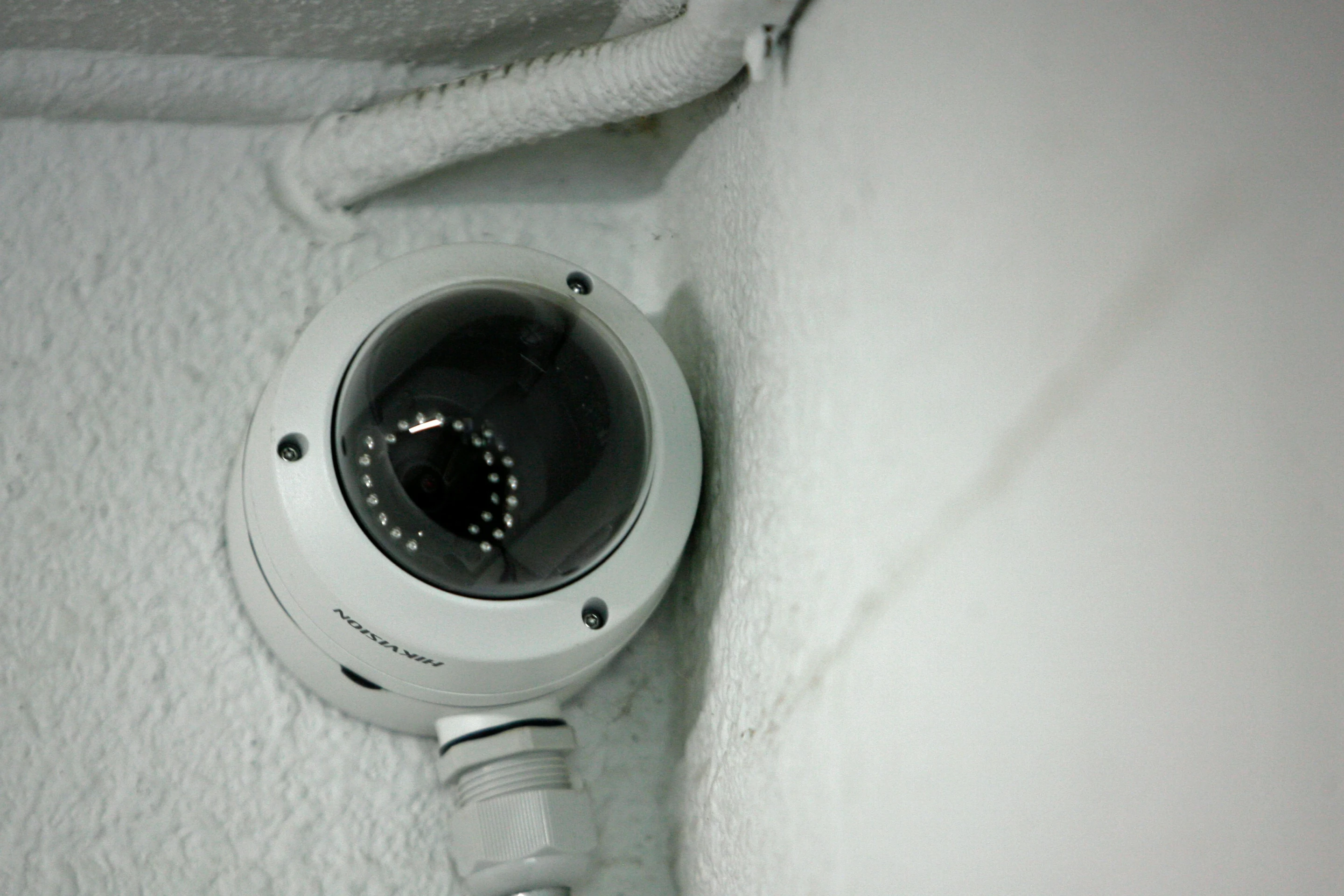
OptiGuard™ adds environmental monitoring within the housing cell itself, using existing IP camera infrastructure to detect breathing patterns and liveness indicators. No new camera hardware is required. No video is stored in the cloud. All processing occurs locally through a dedicated on-premise appliance within the agency's secured network. OptiGuard™ is designed specifically for high-risk, single-occupancy housing environments: medical observation cells, suicide watch placements, and other areas where enhanced monitoring is required without requiring the individual to wear a sensor.
Together, these systems extend biometric awareness from the individual to the environment, creating a layered monitoring model that addresses both physiological and situational risk factors in high-acuity placements. When paired in combination, OverWatch® and OptiGuard™ represent a unified approach to correctional oversight that no single-modality system can replicate.
A Proven Operational Record Across 80+ Correctional Facilities
The most important feature of any monitoring system is not what it promises in a proposal. It is what it has delivered across real deployments, under real custodial conditions.
4Sight Labs' platform is actively deployed across more than 80 correctional facilities in 18 states, with 99.99% system uptime and over 4,000,000 hours of biometric data collected from more than 50,000 individuals in custody. That operational record supports a direct, documented answer to the questions correctional leadership must ask before deployment: has this system performed, at scale, under the structural and operational conditions that detention environments present?
The technical specifications, compliance documentation, and key system features are available here.
Correctional leaders interested in evaluating purpose-built correctional monitoring for their facility can request a demonstration or explore additional resources through the 4Sight Labs Resource Center.