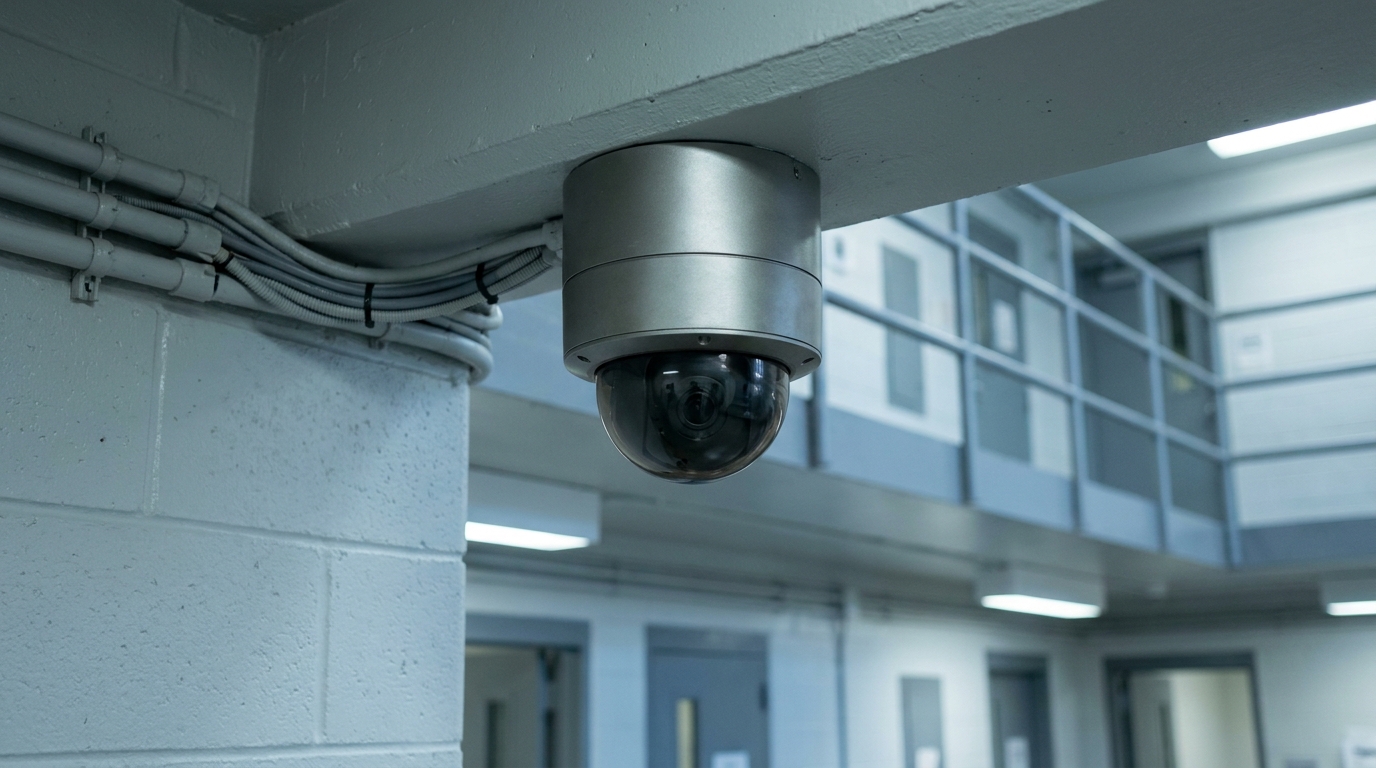
The Procurement Case for Monitoring Technology
.jpg)
Correctional Monitoring & Procurement Process
Monitoring technology procurement often comes down to the lowest bid. It shouldn't. Procurement teams that default to unit cost when comparing vendors are answering the wrong question.
The systems selected today will shape an agency's supervision capability and legal exposure for years to come. A more complete evaluation framework treats cost as one variable among several, not the deciding one.
This discussion focuses on procurement and risk-framing considerations for correctional monitoring technology and is not intended to provide legal or financial advice. Procurement decisions, budget commitments, and litigation risk assessments should always be directed by qualified legal counsel, agency financial officers, and applicable procurement policy.
Why Unit Cost Is the Wrong Starting Point
A purchase price comparison is the easiest number to put in a spreadsheet, but it rarely reflects the full financial picture of a monitoring technology deployment.
- Installation and integration: connecting the system to existing jail management or offender management systems.
- Staff training time: how long it takes officers and medical staff to learn to operate the system, from hours to multi-day cycles.
- Ongoing maintenance and hardware replacement: the frequency and cost of keeping the system running over the life of the contract.
- Vendor support responsiveness: how quickly a vendor resolves issues once the system is deployed.
A lower upfront bid that requires frequent hardware replacement, generates integration delays, or lacks reliable technical support can cost an agency more over five years than a higher-priced system engineered for durability and interoperability.
Procurement officers who isolate unit cost from these downstream factors risk approving a solution that appears economical at signing but becomes a recurring budget liability.
This framing matters most for facilities operating on fixed annual budgets. Evaluating vendors on documented uptime history, integration compatibility, and support infrastructure, not sticker price alone, gives procurement teams a defensible basis for the decision. Installation footprint and training time belong in this calculation too. A system that runs on light infrastructure, such as a single router per floor, and that officers can learn in a matter of hours rather than days, costs materially less over time than one requiring extensive rewiring or multi-day training cycles.
Framing the decision this way shifts the conversation from what a system costs to what it costs to operate reliably, the question that ultimately determines whether a system performs when it matters.
Weighing Technology Cost Against Litigation Exposure
Custodial death and inadequate supervision claims have produced settlements that run into the millions of dollars in jurisdictions across the country. Every case is fact-specific and outcomes vary widely, but the pattern is consistent enough that budget officers should weigh monitoring technology costs against the financial exposure created by gaps in supervision.
This is not a matter of predicting or guaranteeing outcomes. Monitoring technology is designed to support earlier intervention and provide staff with additional operational awareness, not to eliminate risk entirely.
Treating a monitoring system as an optional expense, rather than a risk-mitigation investment, misses the one comparison that matters most to counsel and command staff alike.
For budget officers preparing a request, that comparison comes down to two figures: the relatively modest annual cost of a monitoring platform, and the potential financial and reputational cost of a single adverse litigation outcome tied to unsupervised distress in custody. Framing the purchase decision alongside historical liability trends, without overstating certainty, gives budget officers a more defensible basis for the expenditure.
Building a Business Case Budget Officers Will Back
An effective business case for command staff pairs operational need with measurable performance data. Rather than relying on vendor marketing language, procurement teams should request documented figures.
- System uptime history: verified performance data, covering both server uptime and alert delivery, across a vendor's current deployment base, not a projected figure.
- Battery life under continuous use: how long a wearable sensor operates continuously before requiring a recharge, and whether that figure reflects continuous monitoring or a device that cycles on and off to conserve power, since a longer stated number can sometimes mean less consistent coverage, not better engineering.
- Data integration compatibility: whether the platform connects to existing records systems without custom development.
- Hosting security credentials: where data is stored and what compliance standards govern it.
For example, a system that has demonstrated 99.99% uptime across its deployed facility base and offers 14-day battery life on its wearable sensors gives budget officers concrete figures to compare against staffing costs, current supervision gaps, and existing infrastructure limitations. These specifics matter more to a budget committee than general claims of improved safety.
A business case built on verifiable operational data, rather than broad promises, is easier to defend to county commissioners, sheriffs' oversight boards, and budget review committees.
Command staff should also be prepared to show how the technology supports existing documentation obligations tied to observation standards, since many jurisdictions have separate compliance requirements around supervision checks and logging. Framing the technology as ongoing situational awareness and documented duty-of-care for leadership, rather than a one-time equipment purchase, often resonates more with budget committees than a purely technical pitch.
What 4Sight Labs Brings to the Procurement Table
OverWatch® is built to answer the questions procurement teams care about most, with specifics instead of general assurances.
- Documented uptime: system uptime is measured at 99.99% across both cloud infrastructure and alert delivery for current deployments, not estimated.
- Battery life: the wearable sensor monitors continuously for 14 days on a single charge, so battery life rarely becomes an operational gap.
- Integration: integration with a facility's existing jail management, offender management, or case management system happens through secure file transfer.
- Hosting and compliance: data is hosted on Microsoft Azure Government, is SOC 2 compliant, and meets HIPAA compliance standards for handling biometric data.
If a connectivity interruption occurs, redundant infrastructure and built-in failover keep notification delivery moving.
For agencies running a formal jail technology procurement process or responding to an RFP for biometric monitoring, this kind of specificity is what distinguishes a vendor response that can be verified from one that cannot.
Every observation the system captures also becomes part of a documented audit trail, ready to support internal reviews or litigation discovery requests. That transparency is what holds up under scrutiny from auditors, oversight boards, and opposing counsel.
Funding Options Most Agencies Don't Know About
Budget officers evaluating monitoring technology are not always working from a single line-item budget.
Many agencies have applied federal, state, and local funding sources toward correctional monitoring investments, including opioid settlement funds directed by states and counties toward facility technology upgrades, and Department of Justice grant programs such as the Bureau of Justice Assistance's Comprehensive Opioid, Stimulant, and Substance Use Program (COSSUP), which supports jail-based technology tied to substance use and monitoring.
A vendor with experience navigating these programs can meaningfully change the total cost equation for a facility working within a constrained budget cycle.
For procurement teams, the practical step is straightforward: ask whether a vendor provides funding guidance as part of the evaluation process, rather than relying on a single public list of programs that may not reflect what is currently available.
Institutional Defensibility: The Long-Term ROI
Return on investment for correctional monitoring technology is not limited to operational efficiency. It also includes institutional defensibility, the ability to demonstrate, after the fact, that reasonable and documented steps were taken to maintain oversight of individuals in custody.
A system that produces consistent, timestamped records of supervision activity gives an agency evidence of due diligence that did not previously exist in facilities relying solely on manual checks. This documentation supports internal reviews, accreditation processes, and legal defense in the event of litigation.
Procurement teams that account for this dimension of value, alongside unit cost and operational performance, are making a more complete assessment of what the technology actually delivers.
Framing a procurement decision around total cost, risk exposure, and documented performance, not price alone, lets correctional leadership make choices that hold up to later scrutiny, whether from a budget committee, an accreditation body, or a courtroom. Institutional defensibility built on verifiable data is the return that matters most when a facility's supervision practices are eventually reviewed. At its core, this reflects the same equation 4Sight Labs was built on: better information leads to better decisions, and better decisions strengthen safety and welfare. Procurement is where that equation starts.
Questions to Ask Any Monitoring Vendor During Procurement
Procurement teams evaluating monitoring technology should press on documented performance and total cost specifically, not just feature lists. The following questions apply regardless of which platform a facility is considering.
1. Total Cost of Ownership
What does installation, integration, training, maintenance, and hardware replacement add to the sticker price over a five-year period?
A lower unit price can be offset entirely by downstream costs the initial bid doesn't reflect.
2. Documented Performance History
Can the vendor provide verified uptime figures covering both server and alert delivery, along with battery life figures that reflect continuous monitoring, across its current deployment base, not projected numbers?
A budget committee can defend a figure that has been demonstrated in the field far more easily than one described only in marketing materials.
3. Integration Path
Does the platform connect to your existing jail management, offender management, or case management system through secure file transfer, or does it require custom development?
Most JMS, OMS, and case-management connections require some custom integration work to feed data into a monitoring platform; agencies should ask upfront how much of that work falls on their own IT staff versus the vendor.
4. Audit Trail and Documentation
Does the system generate a documented, timestamped record usable for internal review, accreditation, and litigation discovery, or does assembling that record fall to staff?
A record generated automatically is more defensible, and less labor-intensive to produce, than one staff must reconstruct after the fact.
4Sight Labs answers these same questions with documented figures rather than general assurances, not because they are unique to us, but because they are what a defensible procurement record requires, regardless of vendor.
What This Technology Does Not Do
OverWatch® is engineered to strengthen documentation and operational awareness in support of both supervision and procurement decisions. It is a support layer, not an autonomous decision-maker, and staff judgment and agency counsel remain central to every decision it informs.
- Not diagnostic: the platform is not intended for diagnosis or treatment of any medical condition.
- Not a clinical substitute: monitored data is not a substitute for clinical evaluation by qualified medical personnel.
- Not a guarantee: no monitoring system can guarantee an outcome. Continuous biometric monitoring strengthens situational awareness across high-risk scenarios, giving staff the visibility to respond when conditions change. It does not replace staff judgment, staffing levels, or training.
- Not autonomous: alerts direct staff attention; they do not act on their own or make a determination about an individual's condition.
Frequently Asked Questions
Does a lower unit price always mean lower total cost?
No. Total cost of ownership includes installation, integration, training, maintenance, and hardware replacement over the life of the contract, factors that can offset a lower upfront bid entirely if support or durability are inconsistent.
Can monitoring technology guarantee a facility avoids litigation?
No. Monitoring technology is designed to support earlier intervention and provide additional operational awareness; it does not eliminate risk or guarantee an outcome.
Are there funding sources beyond a facility's standard budget?
Some agencies have applied federal, state, and local funding sources, including opioid settlement funds and Department of Justice grant programs such as COSSUP, toward correctional monitoring investments. Availability varies, and procurement teams should confirm current eligibility directly.
What documentation should procurement teams request from a vendor?
Verified uptime covering both server and alert delivery, battery life data reflecting continuous monitoring, integration compatibility with existing records systems, and hosting security credentials, rather than general marketing claims.
Framing a procurement decision around total cost, risk exposure, and documented performance, rather than price alone, is what allows correctional leadership to make choices that hold up to later scrutiny, whether from a budget committee, an accreditation body, or a courtroom.
See how OverWatch® gives procurement teams documented, verifiable figures instead of general assurances. Book a Demo to see the platform in action.
Correctional leaders seeking additional guidance on evaluating monitoring technology can explore the 4Sight Labs Resource Center, including detailed information on the Unified Correctional Biometric Platform.

.jpg)