Identifying Blind Spots in High-Risk Housing Units

Visibility Challenges in Detention Supervision
Structural design in detention facilities creates supervision visibility gaps. Explore how agencies identify blind spots in high-risk housing and strengthen monitoring coverage.
Every detention facility has them, positions within housing units where direct supervision visibility is limited or absent by design. In standard housing environments, those gaps are manageable. In high-risk housing units, where individuals in detox, suicide watch, or behavioral observation placements may deteriorate rapidly and without warning, a blind spot in supervision coverage is not an inconvenience. It is a liability.
This discussion focuses on operational supervision considerations within detention facilities and is not intended to provide clinical or policy guidance.
The Visibility Problem Built Into Detention Design
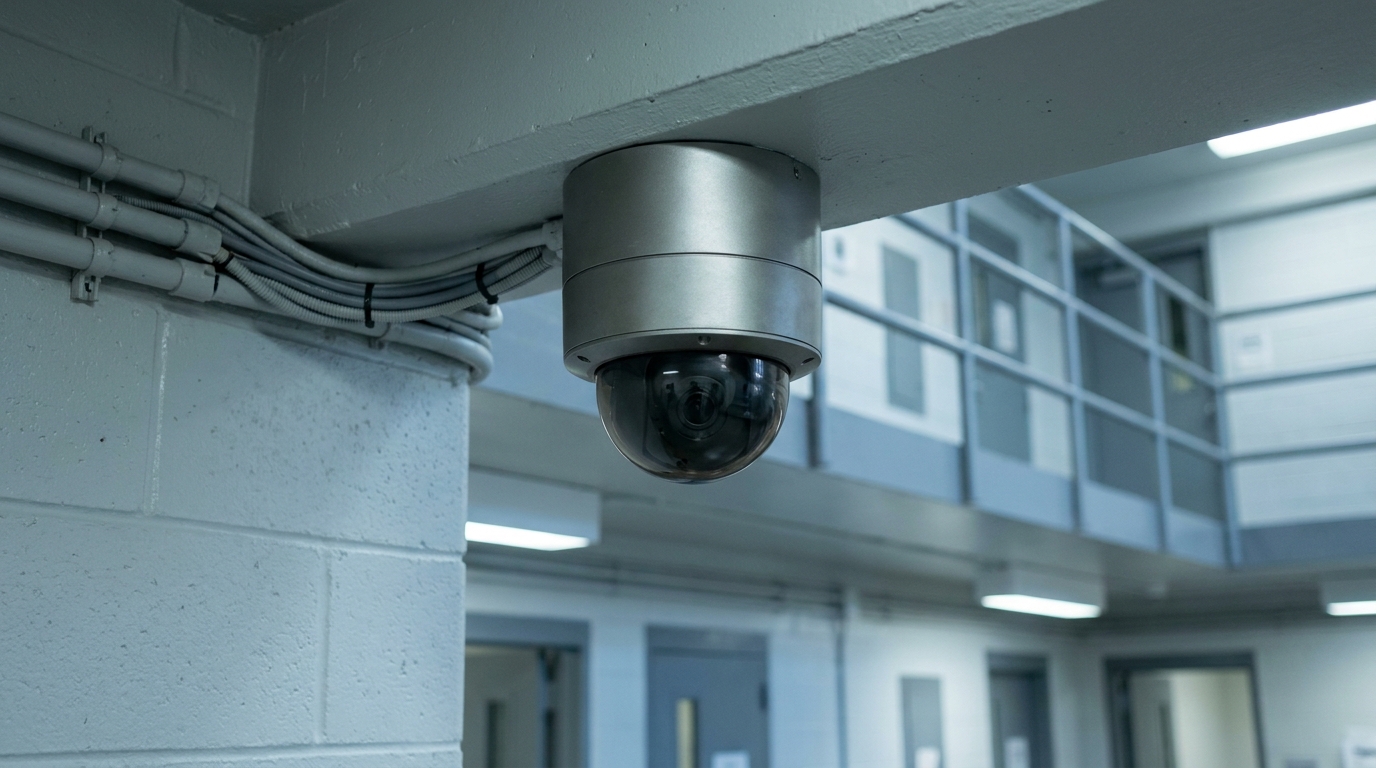
Detention facilities are designed around security imperatives that often work against supervision visibility. Reinforced concrete walls, steel security doors, tiered cell blocks, and control room positioning are all features that exist for legitimate operational reasons. They also create a physical environment where continuous direct observation of every high-risk detainee is structurally impossible from any single officer’s vantage point.
In high-risk housing environments, this creates a specific and consequential problem. Individuals assigned to these units require the closest possible supervision. Yet the very design of the facility may ensure that some portion of those individuals, at any given moment, are outside the direct line-of-sight of the officer responsible for their welfare.
For detention administrators responsible for monitoring high-risk housing units, identifying where those blind spots exist in the facility’s specific layout is the first step toward addressing them operationally.
Common Structural Blind Spots in High-Risk Housing
While every facility has its own layout, common structural features that create visibility gaps in high-risk housing include:
- Cells positioned at the end of angled corridors where sightlines from the officer station do not reach
- Tiered upper-level cells that require officers to physically travel to a different elevation to confirm observation
- Observation cells positioned behind security doors that obstruct visual access from main corridors
- Corner cells or cells adjacent to structural columns that fall outside camera coverage angles
- Areas where facility design concentrates high-risk placements in locations least accessible to continuous visual supervision
These limitations are not unique to older facilities. Modern detention construction balances security, efficiency, and operational flow in ways that frequently produce areas of reduced visibility, particularly in dedicated observation housing environments where the pressure to monitor closely is highest.
Camera Coverage: Useful, but Not Complete
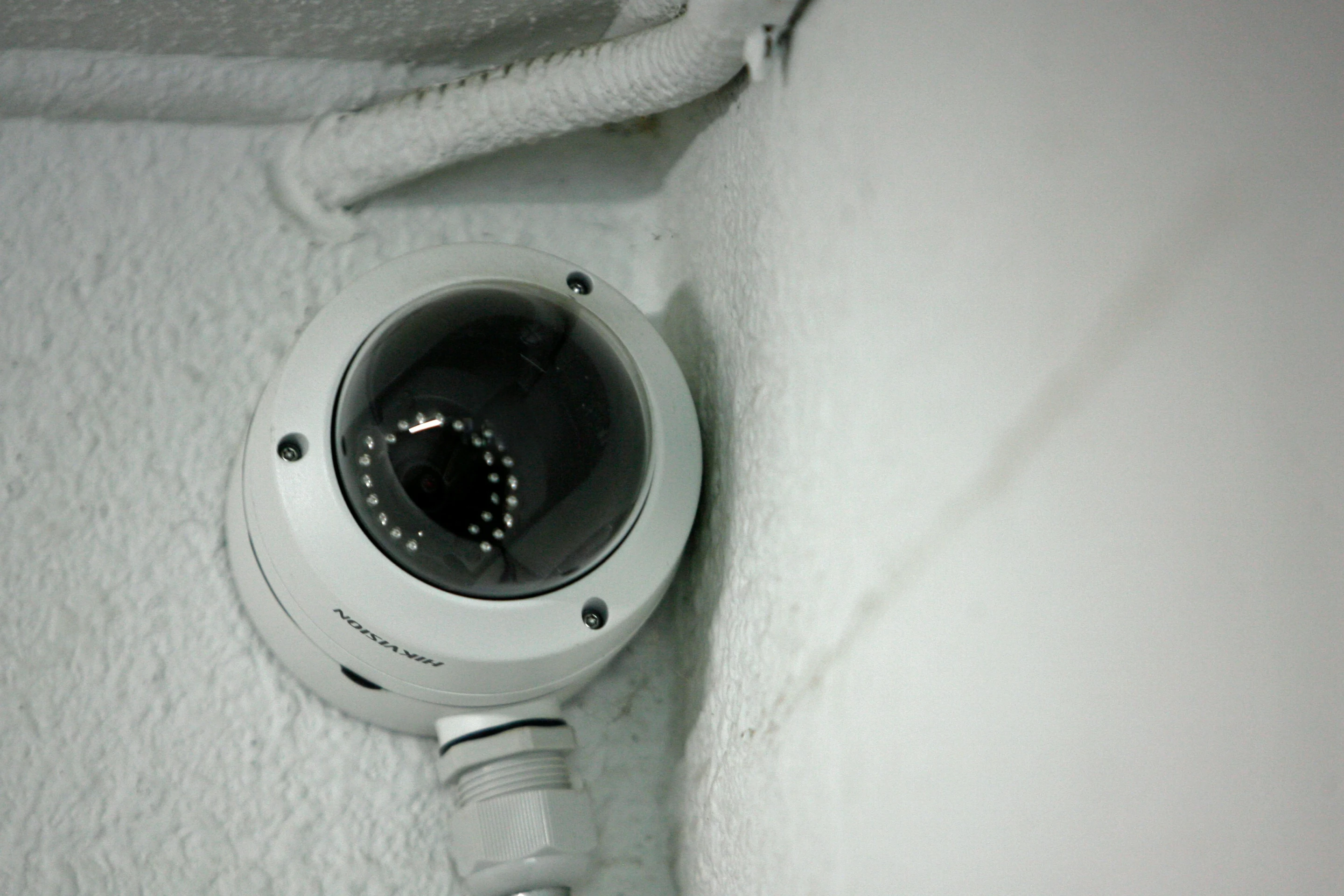
Most detention facilities supplement officer supervision with camera systems, and this is operationally valuable. Camera coverage can extend visibility into areas where officers cannot maintain continuous physical presence, and camera footage provides an important evidentiary resource during incident review.
But camera systems also have limitations worth examining honestly.
Camera placement is typically designed around security priorities, not supervision priorities. Viewing angles may cover cell doors without providing clear visibility of the full cell interior. Architectural features can create coverage gaps between adjacent cameras. And while cameras capture what happened, they do not alert staff to what is currently happening.
For inmate supervision in jail environments where the goal is not just documentation but early awareness of deteriorating conditions, a camera system that records an event without triggering an alert is a documentation asset, not a supervision asset.
Wearable Monitoring: Awareness Without Sightlines
One of the most significant operational capabilities that wearable biometric monitoring brings to high-risk housing is its independence from sightlines. The system does not need an unobstructed view of a detainee to track their physiological condition.
Systems such as OverWatch®, part of the Unified Correctional Biometric Platform developed by 4Sight Labs, continuously monitor heart rate, blood oxygen levels (SpO₂), skin temperature, and motion activity regardless of where within the housing unit an individual is located. When monitored values change significantly, an alert is generated and transmitted to staff, providing awareness that exists entirely independent of line-of-sight constraints.
This matters in a blind-spot context because the individuals most likely to be in areas of limited visibility — corner cells, upper-tier placements, observation areas at the far end of corridors — are receiving the same continuous biometric monitoring as detainees in easily visible locations. The blind spots in the facility’s physical supervision coverage do not become blind spots in the monitoring coverage.
OverWatch® uses LoRaWAN long-range wireless technology, which penetrates reinforced concrete and steel structures reliably, maintaining signal integrity in the same locations where physical visibility is most limited.
Fixed-Environment Monitoring: Filling the Camera Gaps
Where wearable monitoring provides physiological awareness independent of sightlines, fixed-environment monitoring technologies address the camera gaps that traditional CCTV systems leave unaddressed.
OptiGuard™ uses existing camera infrastructure to perform continuous liveness detection within housing cells, analyzing movement patterns and breathing-related motion without requiring new hardware, firmware changes, or modifications to existing video management systems. Where a standard camera records, OptiGuard™ actively evaluates, detecting the absence of movement or breathing patterns that may indicate an individual in distress.
This is particularly relevant in high-risk housing blind spots because OptiGuard™ can provide active alerting from camera positions that were previously passive recording resources. A camera covering a partially obstructed cell door does not need to be replaced. It needs to be connected to a system that can evaluate what it sees and generate an alert when conditions indicate concern.
The combination of OverWatch® and OptiGuard™ within the Unified Correctional Biometric Platform creates a layered monitoring architecture that addresses both the physiological and visual gaps in high-risk housing supervision.
What Blind Spot Analysis Means for Detention Leadership
For sheriffs, jail administrators, and command staff, a systematic review of blind spots in high-risk housing environments is not simply an operational exercise. It is a liability mitigation exercise.
Post-incident investigations routinely examine facility layout, camera placement, and observation round patterns in relation to the location of the incident. When an incident occurs in an area of known limited visibility, the question of whether the facility had taken steps to address that visibility gap becomes central to the investigative and litigation record.
Agencies that can demonstrate a systematic approach to high-risk detainee monitoring that addresses the structural limitations of their specific facility layout are in a significantly stronger institutional position.
Turning Blind Spots Into Monitored Coverage
The architecture of a detention facility is largely fixed. What agencies can change is the monitoring system operating within that architecture.
Platforms like the Unified Correctional Biometric Platform, currently deployed in more than 72 jails across 18 states and monitoring more than 50,000 individuals in custody, demonstrate what a layered monitoring approach looks like at operational scale. The platform’s 99.99% system uptime ensures that the coverage it provides is not interrupted by system reliability issues.
Blind spots are a design reality of detention facilities. They do not have to be supervision realities.
Correctional leaders interested in strategies for addressing visibility limitations in high-risk housing environments can access additional resources through the 4Sight Labs Resource Center.